Coral teething rattles & child charms
Meaning
The 'coral and bells' combines red coral (which protected against the evil eye and was believed to change colour when a child was ill), a silver whistle and bells (noise drove away evil spirits), and a teether for sore gums.
Intent
It was given to infants as a protective charm and a practical toy, often as a christening gift, to guard against evil, illness and teething pain in the most dangerous first year of life.
Significance
It is the perfect example of an amulet becoming a luxury object. Wealthy 18th-century English and American children were painted holding them, and the silver ones by makers like Hester Bateman are now collectors' pieces.
History
Coral for infants goes back to Roman times (Pliny recommends it). Coral-and-bells rattles appear in 16th–17th century paintings and peak in 18th–19th century Britain and America, declining in the early 20th century.
Making yours
10–15 cm silver or silver-gilt handle with whistle, 4–8 small bells and a polished coral or mother-of-pearl teether.Medieval & Early Modern Europe: the tradition
Medieval Europe held two protective systems at once: the Church's sacramentals (relics, blessed wax, saints' medals, written prayers) and an older 'natural magic' of stones, herbs and animal parts inherited from Pliny and the lapidaries of Marbode of Rennes (c. 1090) and Albertus Magnus. Pilgrimage produced millions of cheap lead badges. Renaissance courts wore toadstones and bezoars set in gold, and Protestant reformers attacked both relics and charms. In Catholic Bavaria, Austria, Italy and Spain the folk tradition survived into the 20th century, recorded by collectors like Leopold Kriss-Rettenbeck and Rudolf Kriss, whose collections are now in Munich, and by Walter Hildburgh, who gave thousands of Spanish and Italian amulets to the V&A.
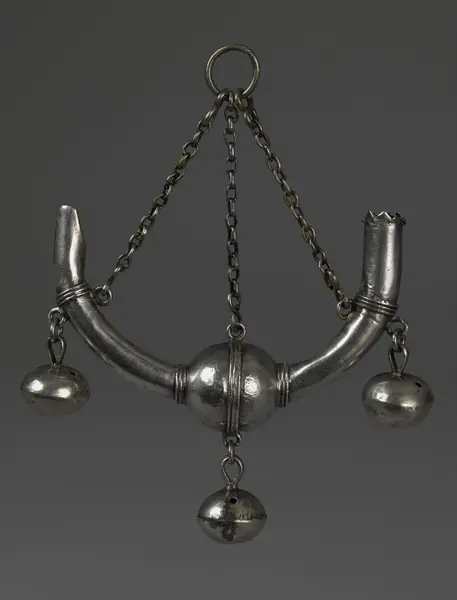 Silver pendent crescent amulet with a whistle and bells, Britain or Spain, 1650-1700Britain · 1650-1700
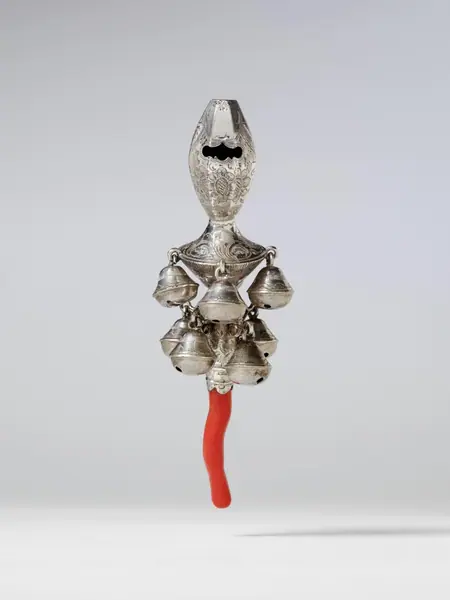 London hallmarked silver body with bulbous whistle at upper end, two rings of bells around centre and coral teLondon · 1823-1824
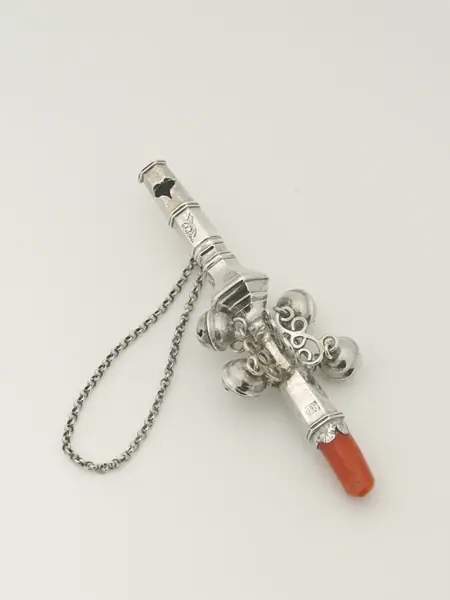 Whistle and Bells with CoralBoston · c. 1722
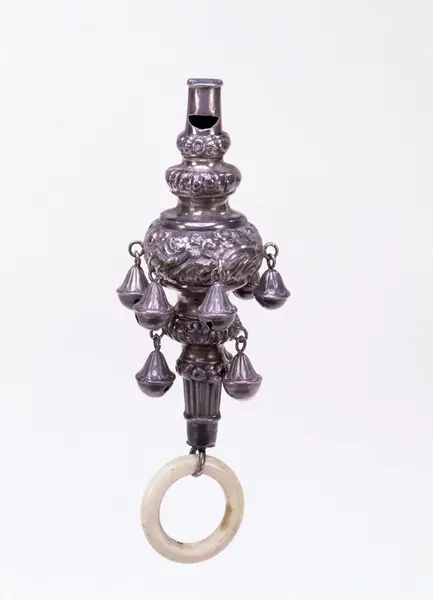 Baby's silver rattle with teething ring of bone made in England (Birmingham) in 1901England · 1901
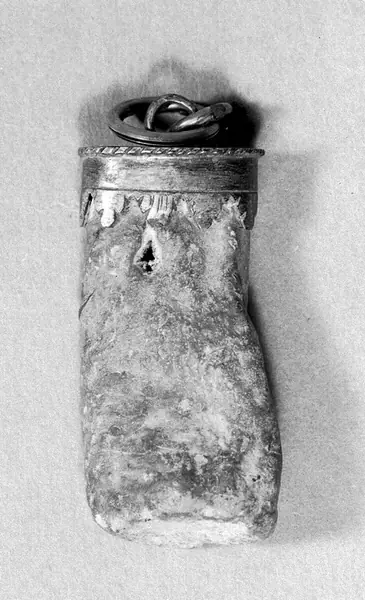 Zahnfeige, mounted as a pendant, for infants when teething (?orris root).United Kingdom
 M0016752: Woman wearing a bridal costume adorned with amulets, from La Alberca, Salamanca Province / M0016753: Amber facetted beads and a neckalce for a teething child
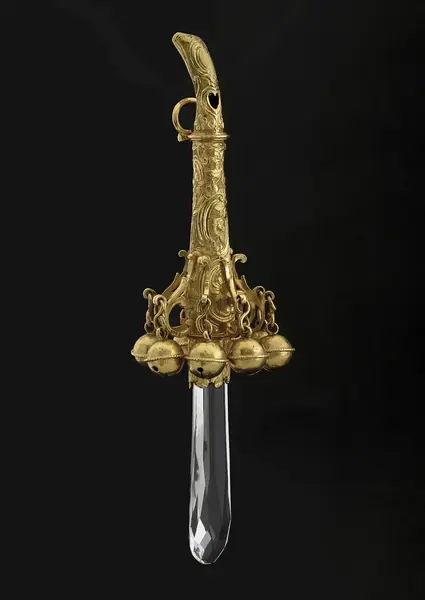 Gouden rammelaar met kristallen bijtstift en gouden belletjes, objectnr 134
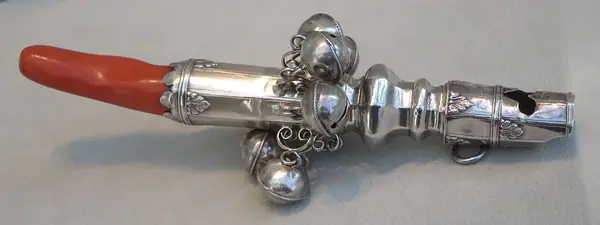 Teething coral made by Peter Van Dyck or Richard Van Dyck, MET
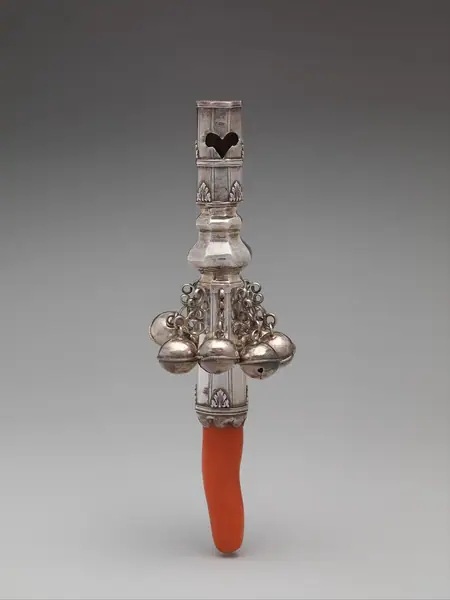 Rattle, Whistle, and Bells
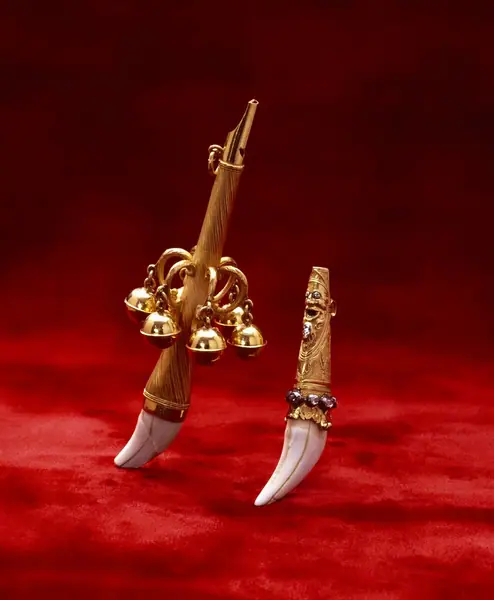 Skallra-visselpipa, 1680-tal, använd av Karl XI:s barn.
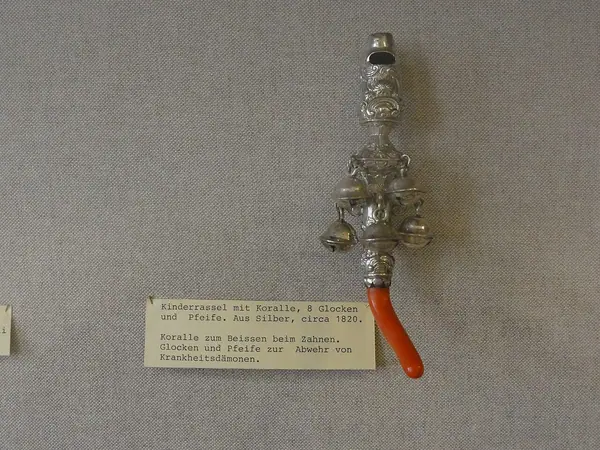 Basel 2012-10-06 Batch Part 3 (2)
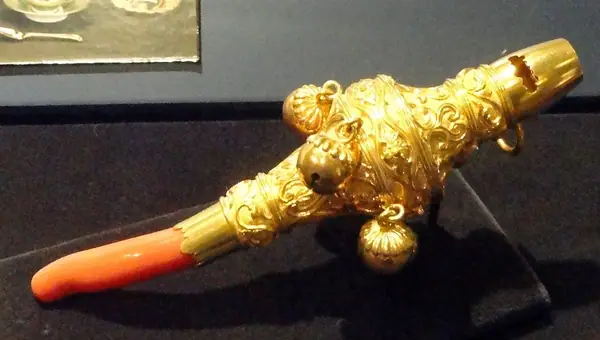 Rattle with coral soother, from silver collection of Elizabeth Conyngham, mistress of George IV of England
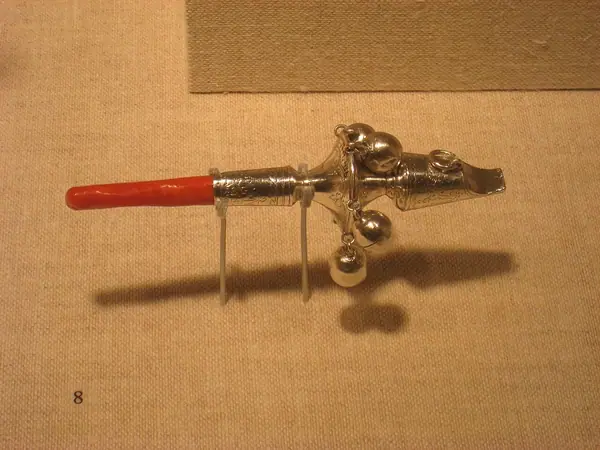 Whistle and Bells, 1795-1800, Paul Revere silver collection, Worcester Art Museum
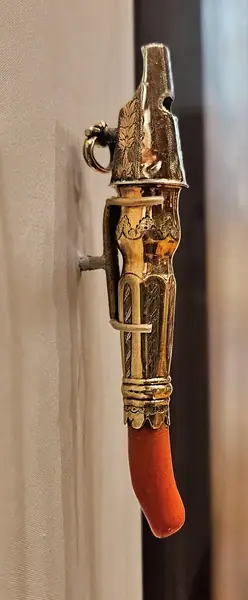 Bateman - Teething Stick and Whistle - side view - HNT
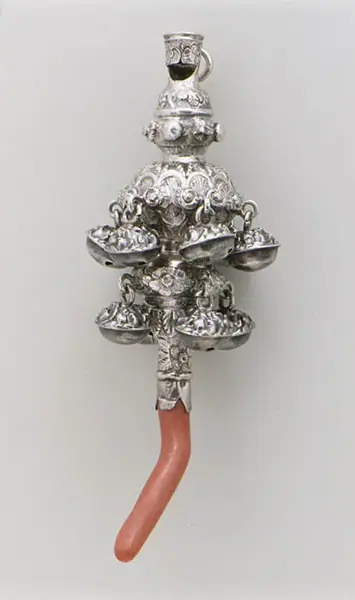 Child's rattle and teether
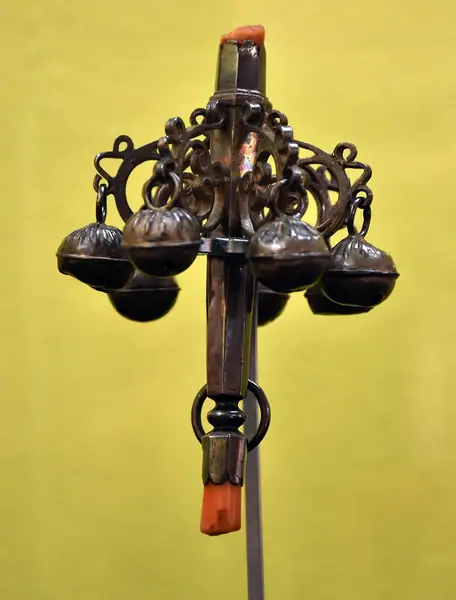 Hochet à grelots Musée du Jouet 19072017 1
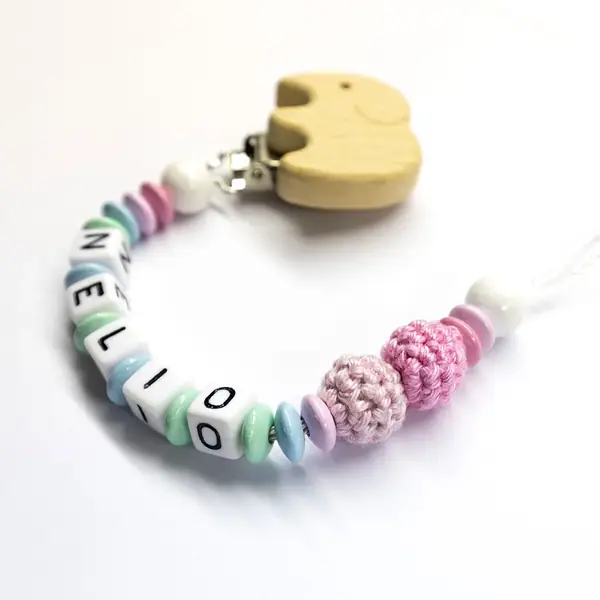 Nuggikette Elefant
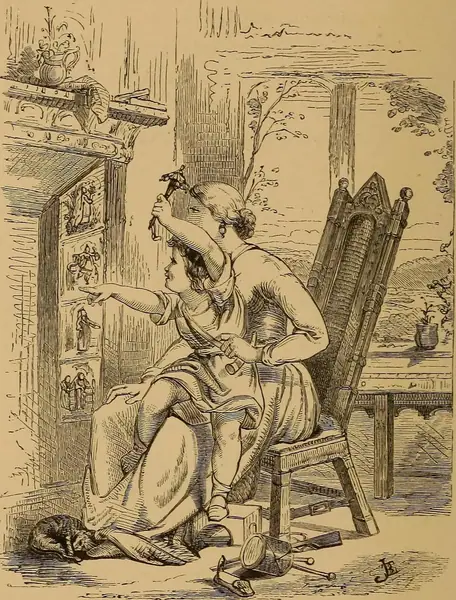 Poems (1852) (14782176132)
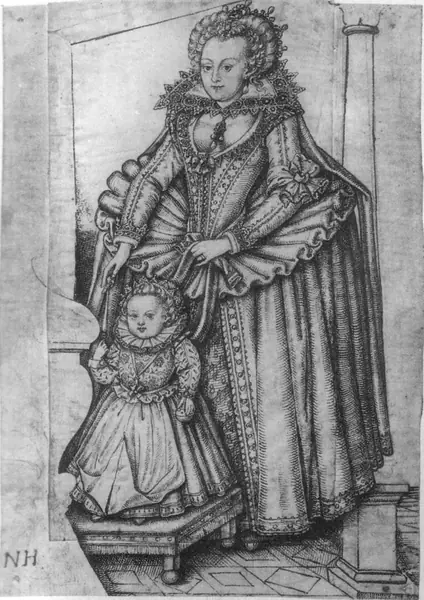 Hilliard Elizabeth Stuart and Son c. 1615
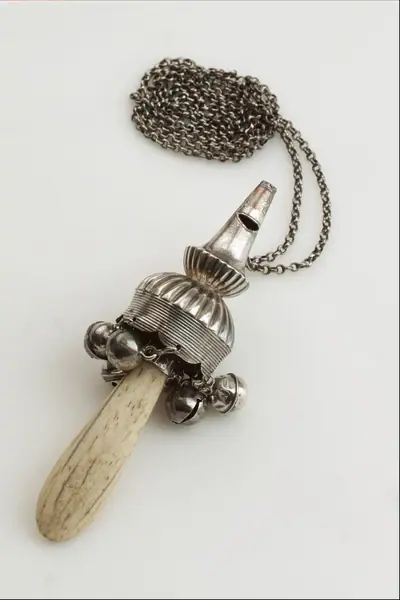 Rattle
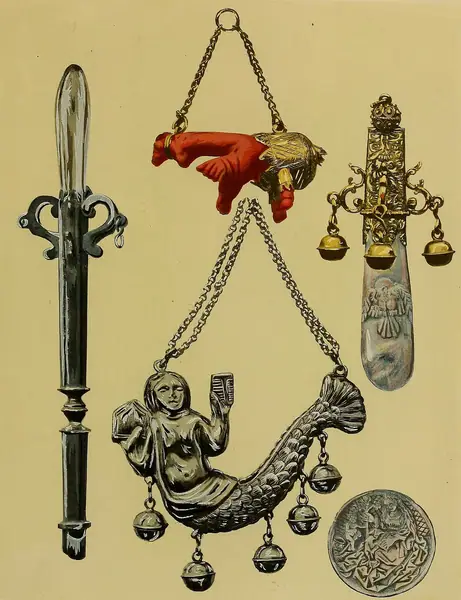 16th and 17th century toy rattles
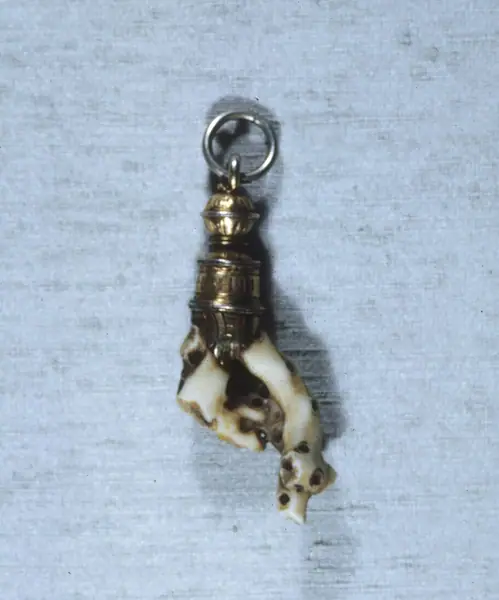 Teething (?) Amulet with White Coral
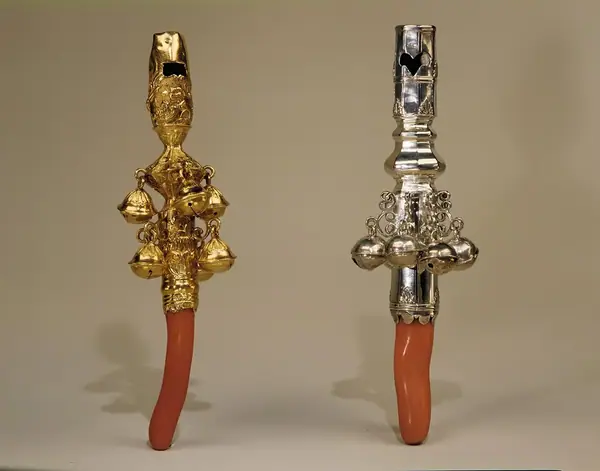 Rattle, Whistle, and Bells
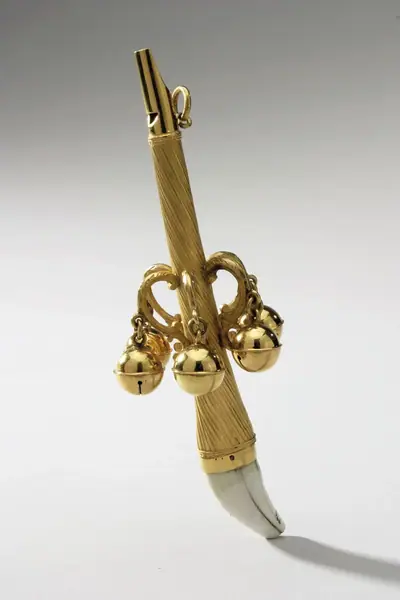 Skallra-visselpipa, 1680-tal, använd av Karl XI:s barn.
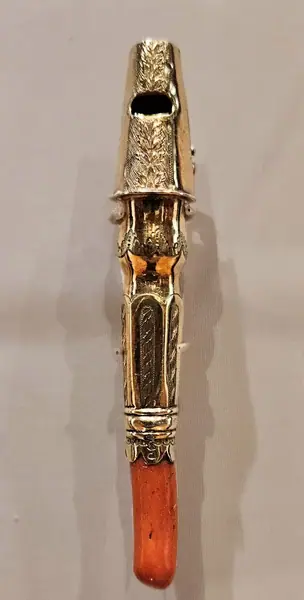 Bateman - Teething Stick and Whistle - HNT
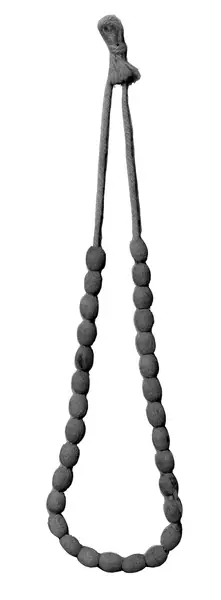 Dental amulets and charms.
More from Medieval & Early Modern Europe: Pilgrim badges · Reliquary pendants & devotional lockets · Agnus Dei waxes · Magic & inscribed rings · Natural magic: toadstones, bezoars, serpent tongues · Fraisenketten & Charivari (charm chains) · Breverl & paper blessings · Coral amulets · Wax & metal votive offerings · Saints’ medals & protective crosses · Other & unsorted Medieval
Every type in the gallery
Anything in the gallery can be made: any piece, any tradition, in its own material or yours, by hand from the documented original. Numbered. Price on commission, quoted before anything is made. I reply within one business day.