Coral amulets
Meaning
Red Mediterranean coral, said in Ovid to be born from Medusa's blood hardening in the sea, carried the power to petrify evil. Its red meant life and blood, and its branching form suggested horns and hands.
Intent
Coral was worn by children and women against the evil eye, illness and bad luck, and hung on babies, cradles and animals. Carved into horns, hands and figas, it doubled its power.
Significance
Coral is the single most important amuletic material of the Mediterranean from antiquity to the present, and the Naples and Torre del Greco coral industry was built on it. It explains why so many amulets are red.
History
Coral amulets are found in Neolithic and Roman contexts, recommended by Pliny and medieval lapidaries, and flourished in Renaissance Italy and Spain. Torre del Greco has worked coral since at least the 16th century.
Making yours
Polished natural branches mounted in silver caps, or carved beads and figas. Use sustainable bamboo coral or dyed substitutes.Medieval & Early Modern Europe: the tradition
Medieval Europe held two protective systems at once: the Church's sacramentals (relics, blessed wax, saints' medals, written prayers) and an older 'natural magic' of stones, herbs and animal parts inherited from Pliny and the lapidaries of Marbode of Rennes (c. 1090) and Albertus Magnus. Pilgrimage produced millions of cheap lead badges. Renaissance courts wore toadstones and bezoars set in gold, and Protestant reformers attacked both relics and charms. In Catholic Bavaria, Austria, Italy and Spain the folk tradition survived into the 20th century, recorded by collectors like Leopold Kriss-Rettenbeck and Rudolf Kriss, whose collections are now in Munich, and by Walter Hildburgh, who gave thousands of Spanish and Italian amulets to the V&A.
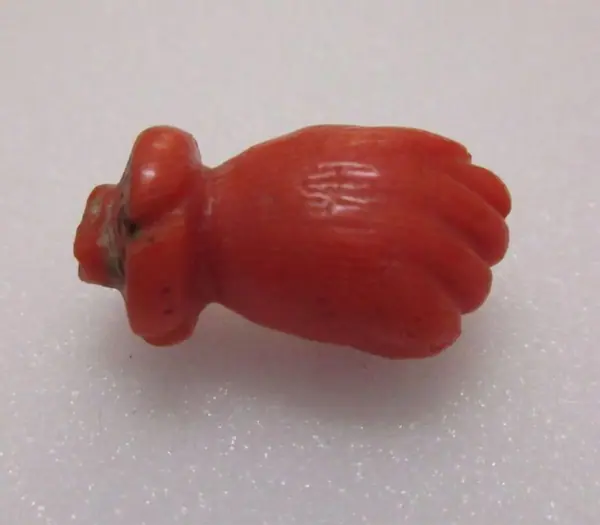 Coral 'fig' amulet carved as a clenched fist with protruding thumb, Spain, 1800-1899Spain · 1800-1899
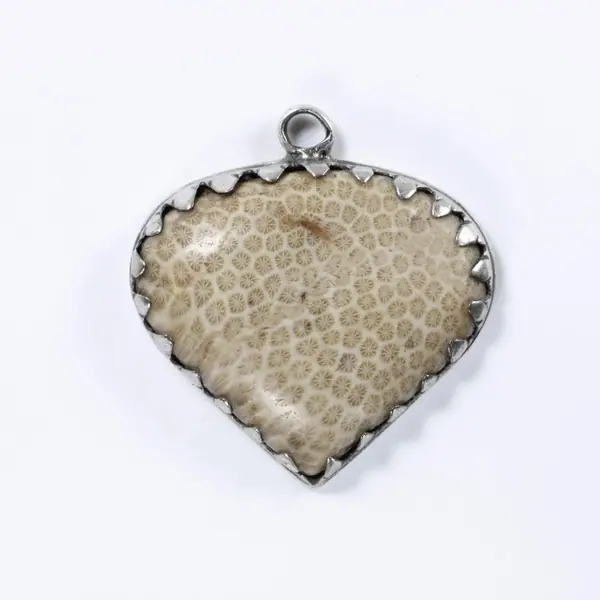 Heart-shaped amulet of fossilised coral (Krätzenstein) in a silver mount, Bavaria (South Germany), about 1800Traunstein · ca. 1800
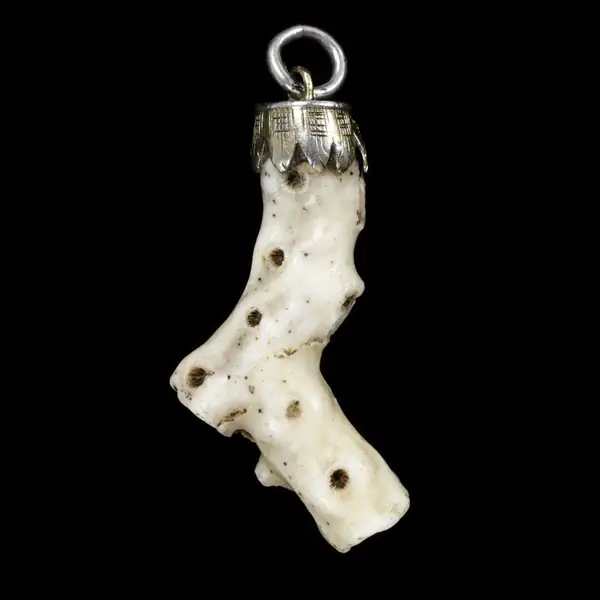 Amulet of an unworked piece of white coral mounted in silver, Bavaria (South Germany), 1800-1850Bavaria · 1800-1850
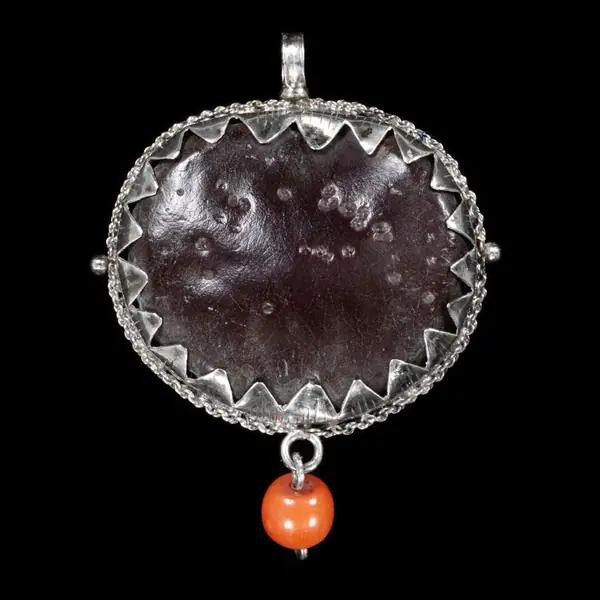 Pendant amulet of a sea-bean seed with a coral bead, mounted in silver, Spain, 1800-1899San Sebastian · 1800-1899
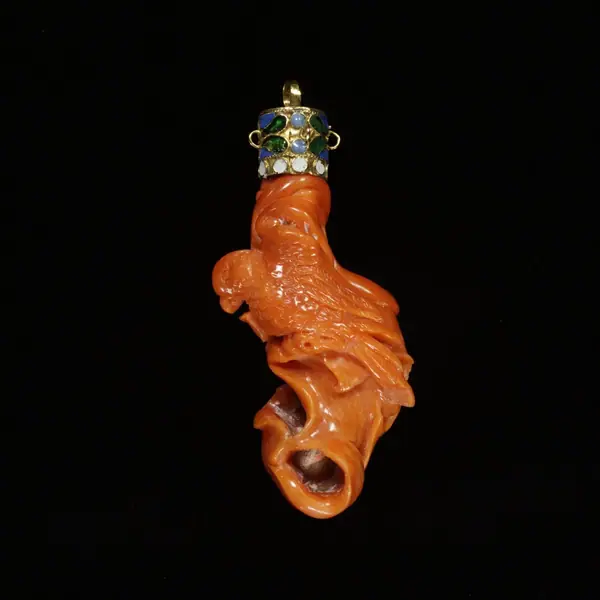 Carved coral amulet for a baby, mounted in enamelled gold filigree, possibly Italy, ca.1600Italy · ca. 1600
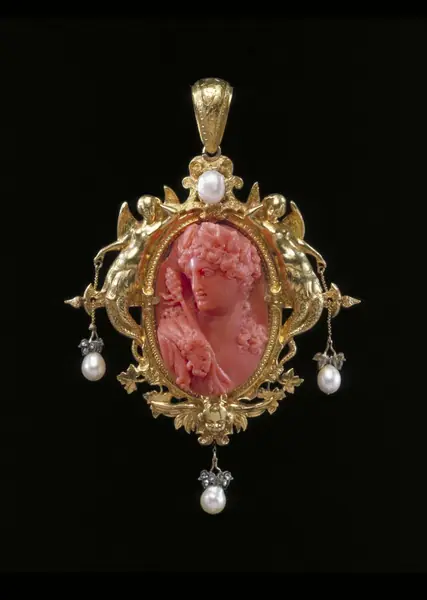 BacchusParis · 1854
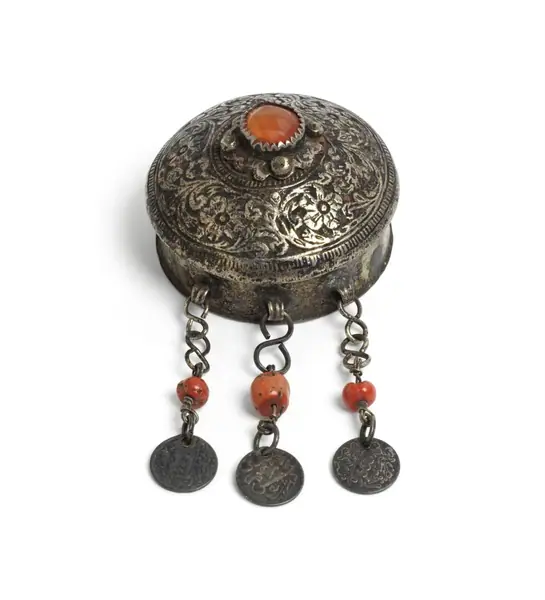 Circular silver box set with a paste cornelian with three silver and coral pendants, Morocco, 1880-1900morocco · 1880-1900
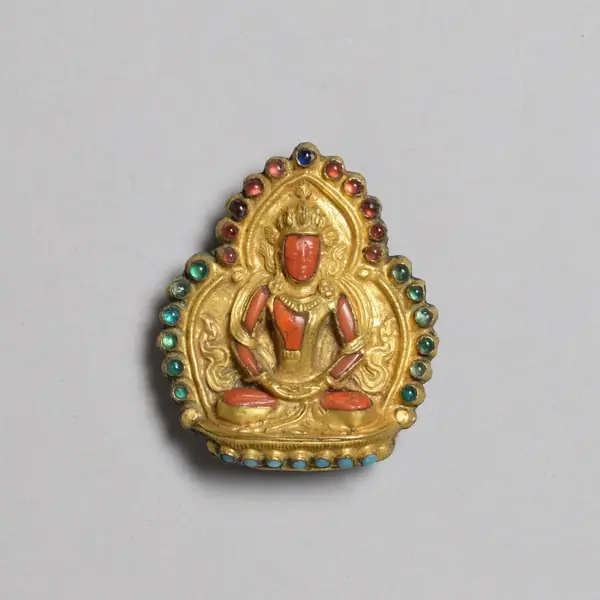 Amitabha Charm, gold, chased, with carved coral and cabocon gemstones, Tibet, cTibet · c. 1700
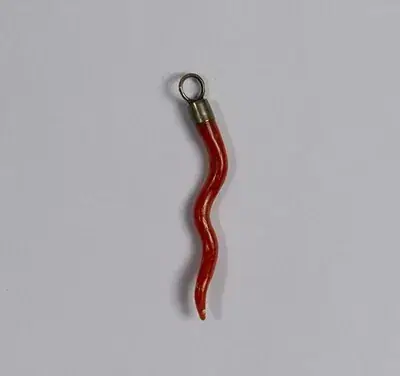 Coral AmuletEurope
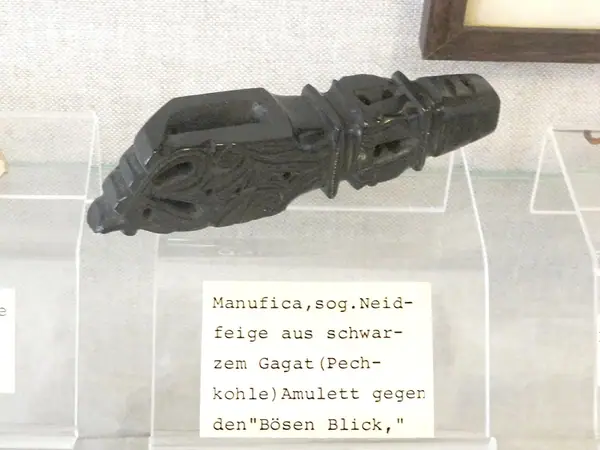 Basel 2012-10-06 Batch Part 3
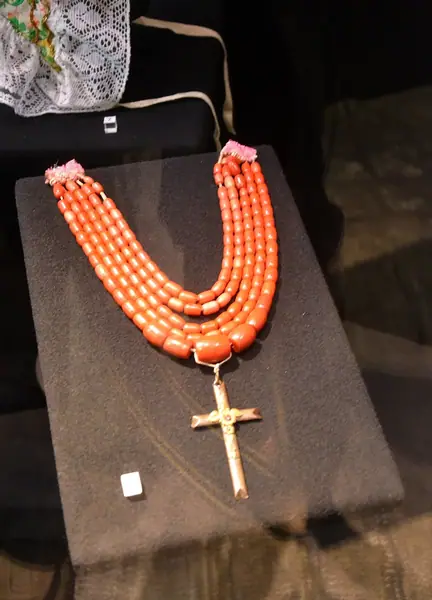 02015 Korallenkette zur Beuthener festlichen Tracht, Deutsch Piekar, ZwischenkriegsjahrePoland
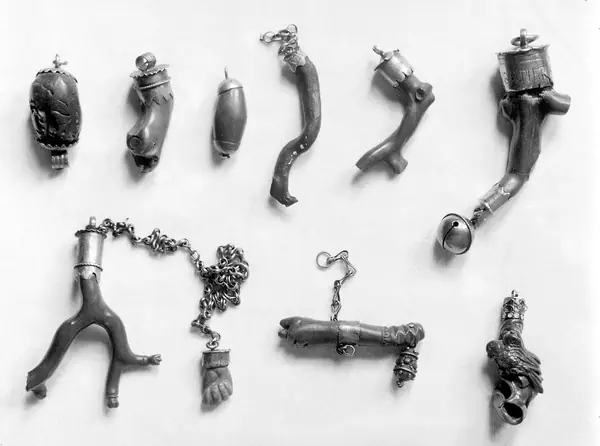 M0016758: Spanish amulets made of coral
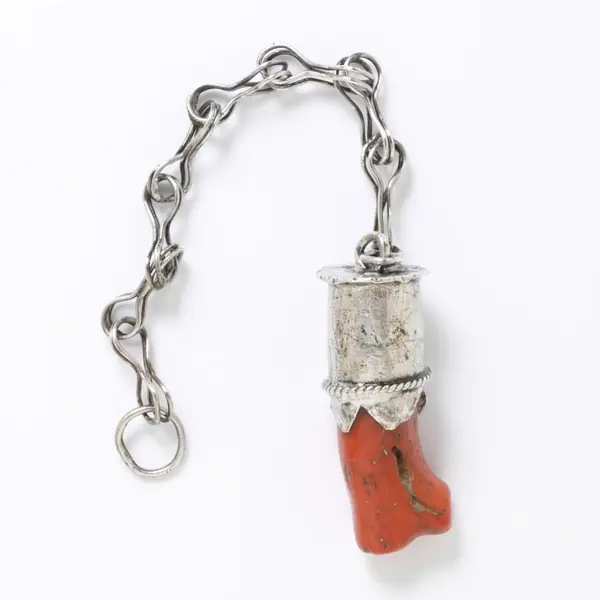 Silver pendant set with coral, Toledo (Spain), 1800-1850Spain · 1800-1850
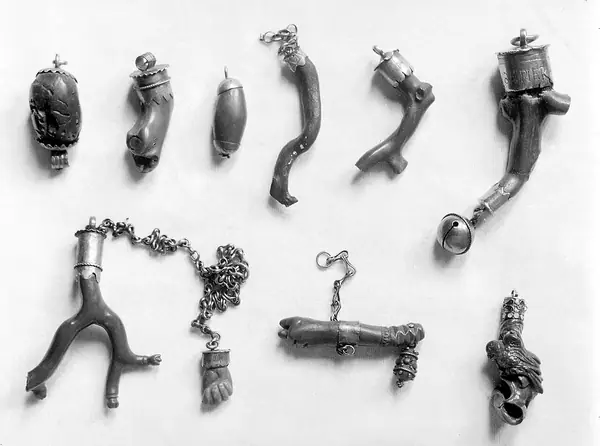 Coral, rough beads, fragments.
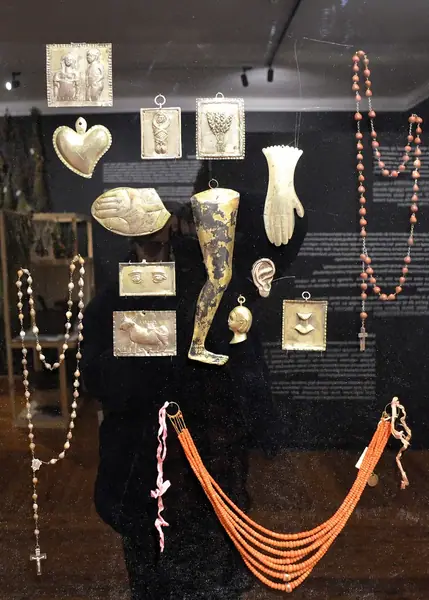 02024 0707 Amulets of Poland, West GaliciaPoland
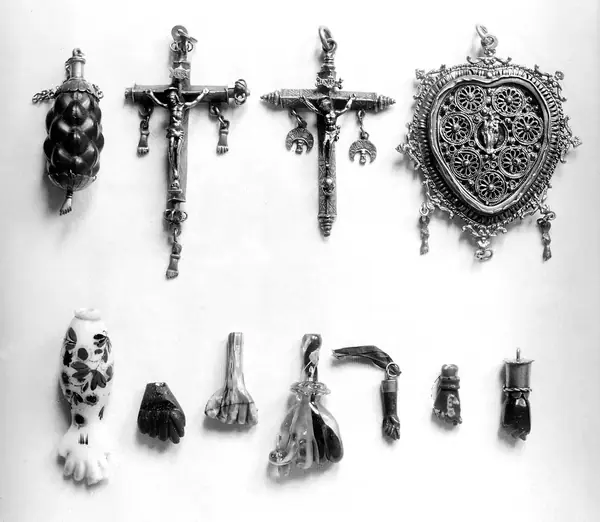 M0016754: Spanish amulets made of glass, bone, coral and jet
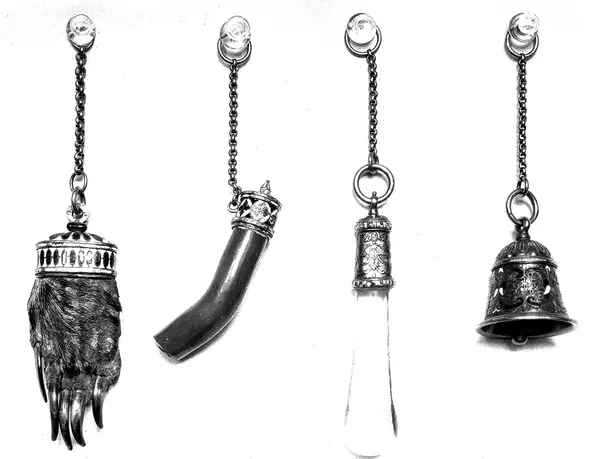 Badger's paw, coral & enamelled gold bell, 17th century.
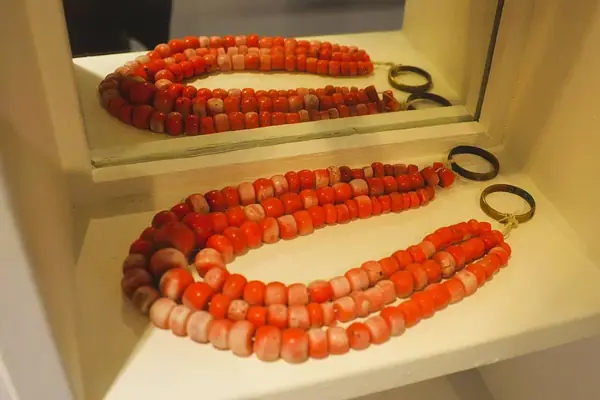 02024 0748 Vintage necklaces. West GaliciaPoland
 M0016751: De Osma family hierlooms: badger's paw, coral & enamelled gold bell, 17th century
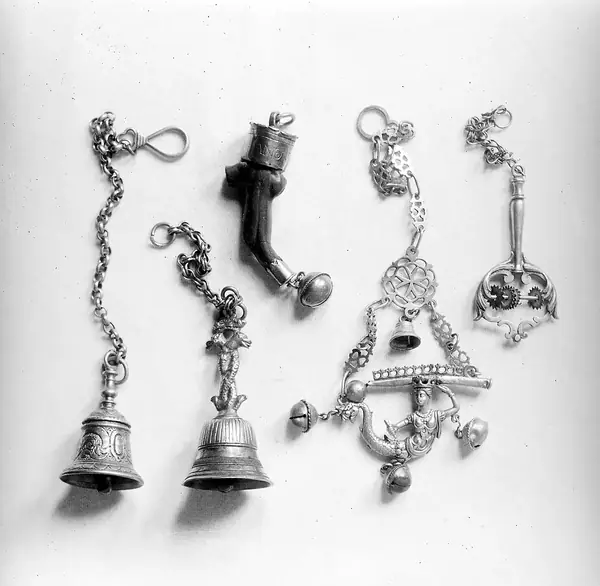 Bells, 2 conical; on coral; on siren; sistrum.
More from Medieval & Early Modern Europe: Pilgrim badges · Reliquary pendants & devotional lockets · Agnus Dei waxes · Magic & inscribed rings · Natural magic: toadstones, bezoars, serpent tongues · Fraisenketten & Charivari (charm chains) · Breverl & paper blessings · Coral teething rattles & child charms · Wax & metal votive offerings · Saints’ medals & protective crosses · Other & unsorted Medieval
Every type in the gallery
Anything in the gallery can be made: any piece, any tradition, in its own material or yours, by hand from the documented original. Numbered. Price on commission, quoted before anything is made. I reply within one business day.