Reliquary pendants & devotional lockets
Meaning
A reliquary pendant holds something holy: a relic, a fragment of wax from an Agnus Dei, a miniature image. It unites jewellery, devotion and protection in one object worn close to the heart.
Intent
It kept the protective power of a saint or of Christ physically on the wearer, and was a focus of private prayer. Gifts of such pendants also expressed love and marked marriage or births.
Significance
Reliquary pendants show how the rich wore their faith and protection in gold and enamel, and many Renaissance jewels were in fact amulets. They connect directly to Byzantine encolpia and to popular medals.
History
Reliquary pendants appear from the early Middle Ages and flourish in Gothic and Renaissance Europe (14th–17th centuries), especially in Germany, Spain and Italy, with rock crystal, enamel and verre églomisé.
Making yours
3–8 cm. Gold or silver-gilt frame with enamel, glazed with rock crystal on one or both sides. The hinged back opens.Medieval & Early Modern Europe: the tradition
Medieval Europe held two protective systems at once: the Church's sacramentals (relics, blessed wax, saints' medals, written prayers) and an older 'natural magic' of stones, herbs and animal parts inherited from Pliny and the lapidaries of Marbode of Rennes (c. 1090) and Albertus Magnus. Pilgrimage produced millions of cheap lead badges. Renaissance courts wore toadstones and bezoars set in gold, and Protestant reformers attacked both relics and charms. In Catholic Bavaria, Austria, Italy and Spain the folk tradition survived into the 20th century, recorded by collectors like Leopold Kriss-Rettenbeck and Rudolf Kriss, whose collections are now in Munich, and by Walter Hildburgh, who gave thousands of Spanish and Italian amulets to the V&A.
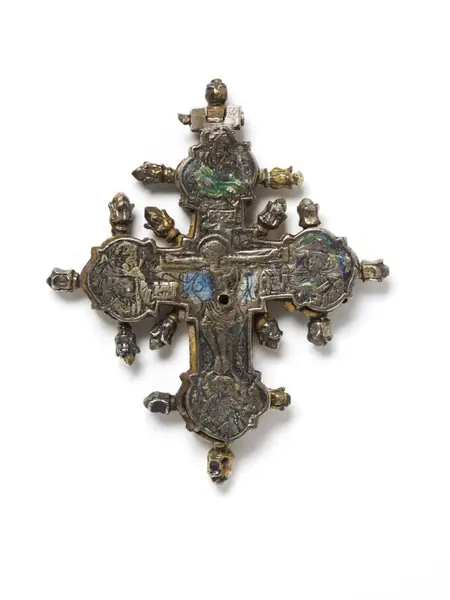 Pendant reliquary cross, silver, silver-gilt and translucent enamel, Italy, caItaly · ca. 1350
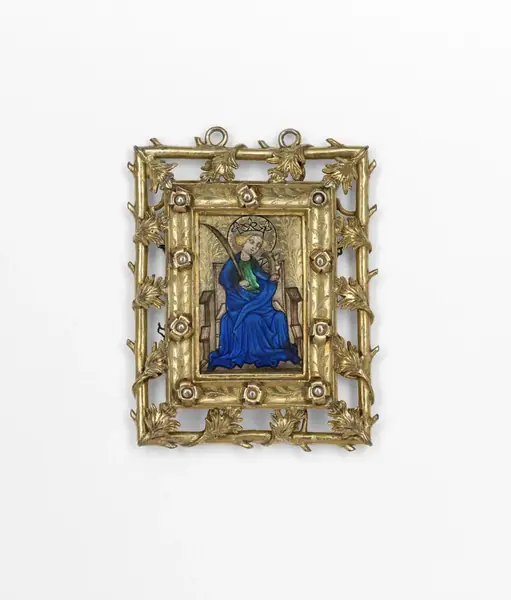 Reliquary pendant depicting St Catherine of Alexandria , silver, silver-gilt, enamel and rock crystalFrance · ca. 1370-1395
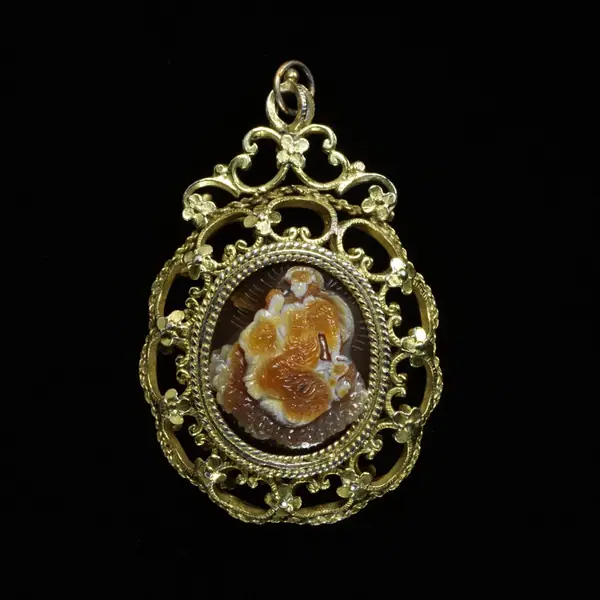 Reliquary pendant in the form of an onyx cameo of the Virgin and Child, set in silver-gilt openwork, Spain, eaSpain · early 17th century
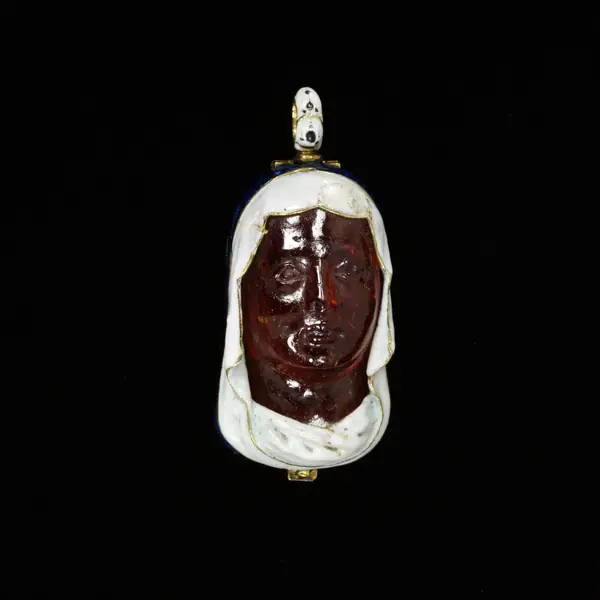 Reliquary pendant in the form of the head of the Virgin Mary, carved out of hessonite garnet set in enamelled Europe · ca. 1640
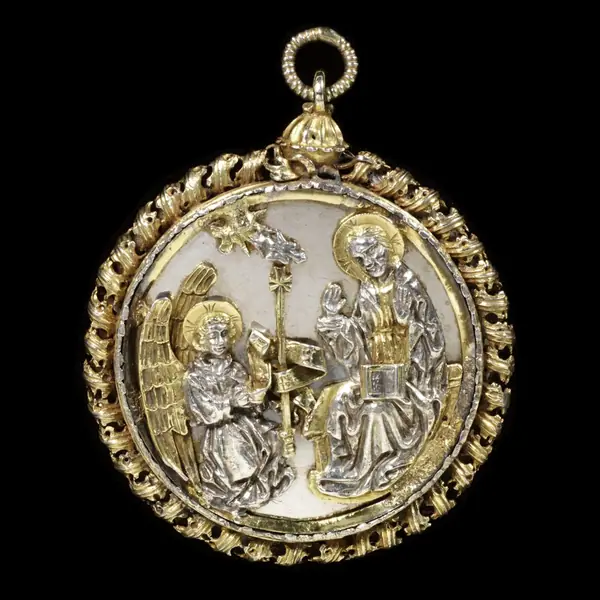 Reliquary pendant, silver, silver gilt, depicting the Annunciation and the Mass of St Gregory . South German, Germany · 1450-1500
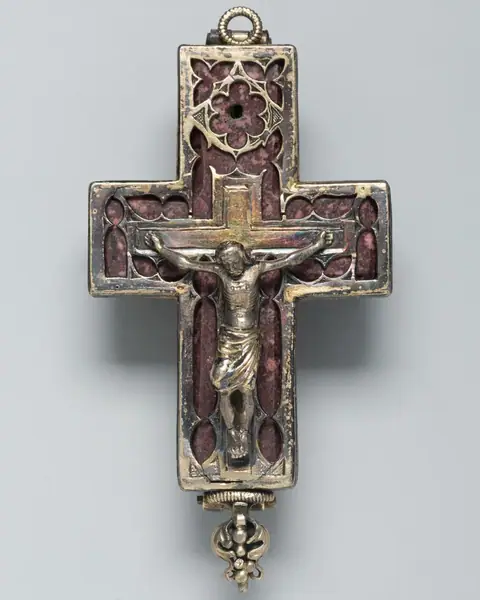 Double-Sided Pendant Reliquary CrossGermany · Interior cross: c. 600-c. 900; pendant: c. 1500, with later additions
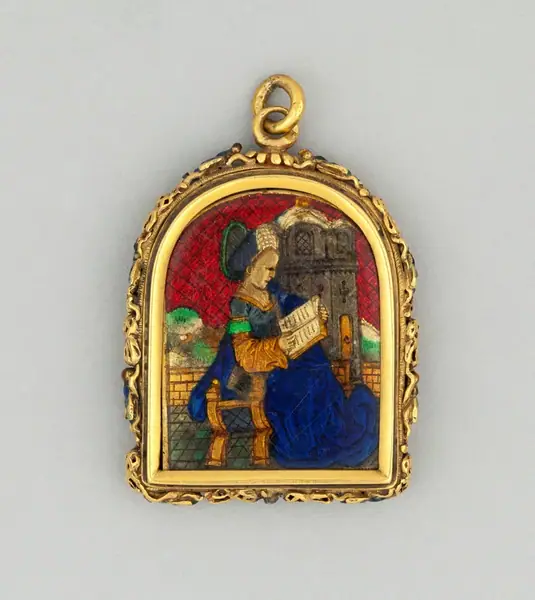 Reliquary Pendant of Saint BarbaraFrance · c. 1500
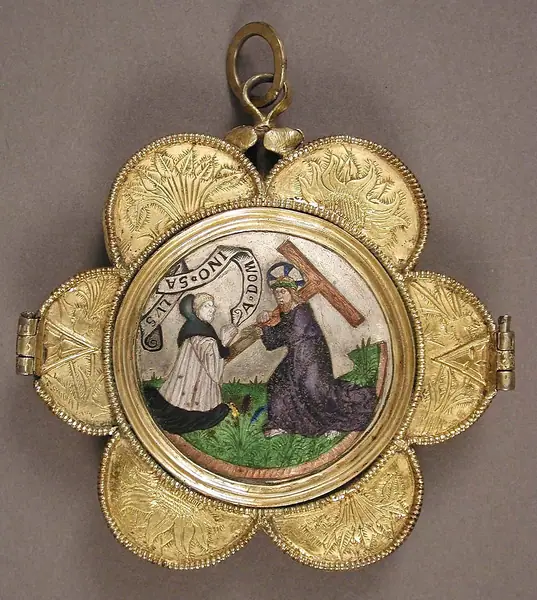 Reliquary Pendant15 th century date QS:P571,+1450-00-00T00:00:00Z/7
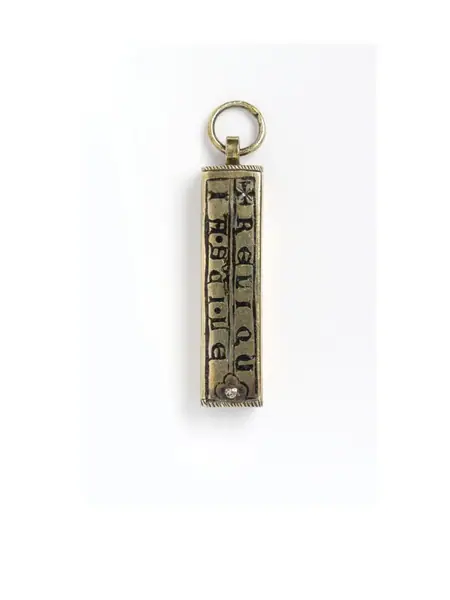 Reliquary pendant, silver-gilt with enamelled inscription, made in Italy, caItaly · ca. 1350
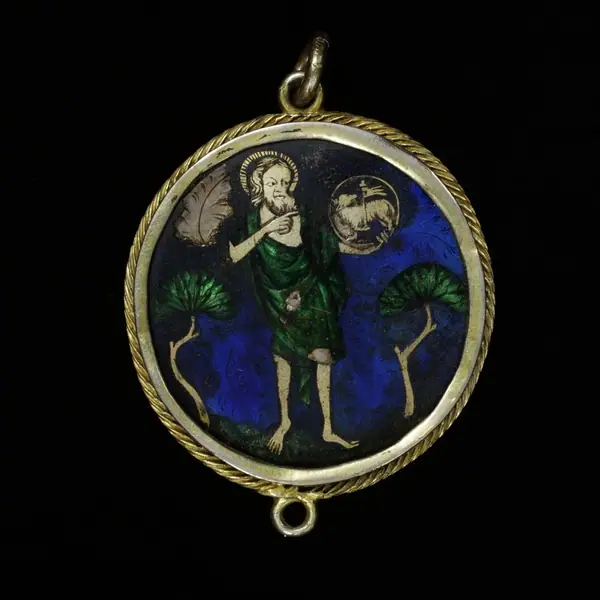 Reliquary pendant, silver, silver-gilt and enamel, depicting St John the Baptist on the obverse, the lid with France · ca. 1350 - 1480
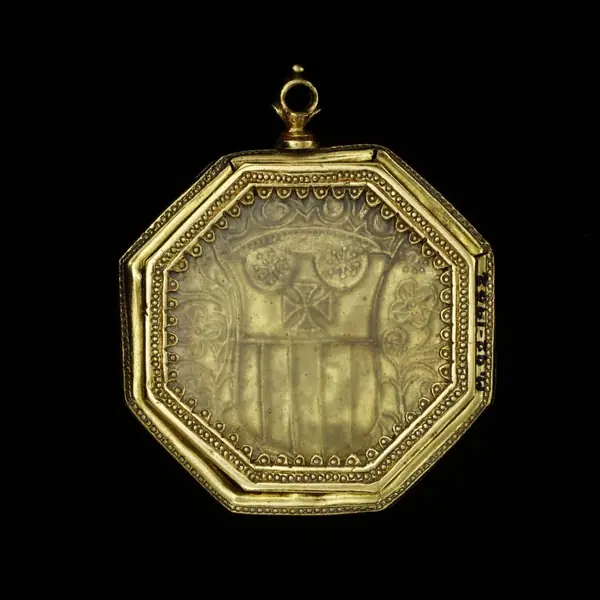 Reliquary pendant of gold and glass, probably made in Spain, 1620-40Spain · 1620-40
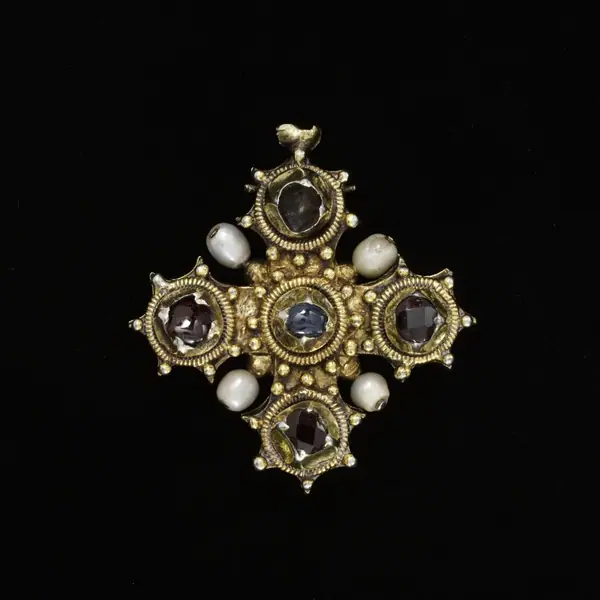 Pendant reliquary crossGermany · ca. 1450-1475
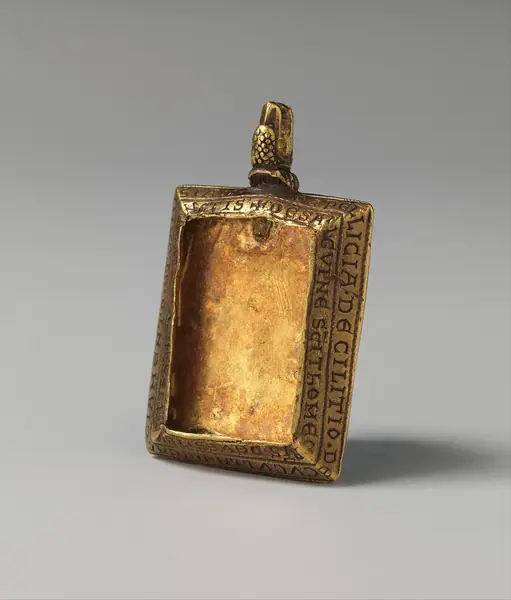 Reliquary Pendant with Queen Margaret of Sicily Blessed by Bishop Reginald of Bath
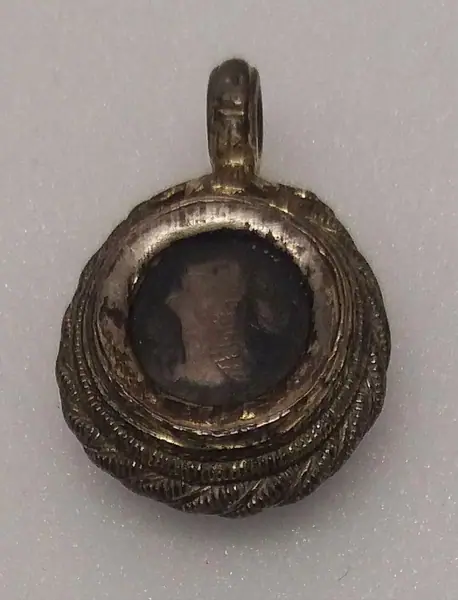 Silver-gilt niello pendent reliquary medalion with a woman's head in profile on one side and a guilloche knot Italy · 1400-1860
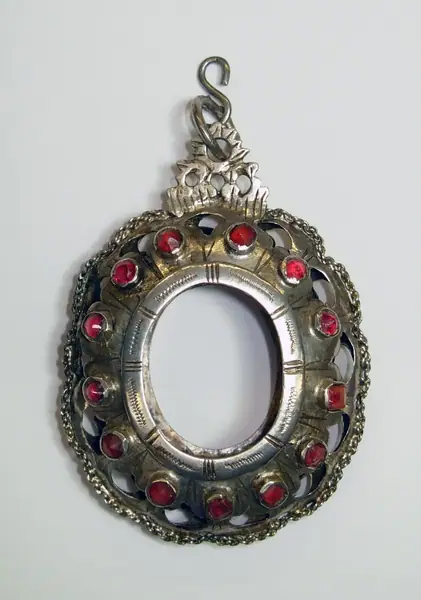 Empty silver reliquary pendant set with red and green pastes, Spain, 1700-1799Spain · 1700-1799
More from Medieval & Early Modern Europe: Pilgrim badges · Agnus Dei waxes · Magic & inscribed rings · Natural magic: toadstones, bezoars, serpent tongues · Fraisenketten & Charivari (charm chains) · Breverl & paper blessings · Coral teething rattles & child charms · Coral amulets · Wax & metal votive offerings · Saints’ medals & protective crosses · Other & unsorted Medieval
Every type in the gallery
Anything in the gallery can be made: any piece, any tradition, in its own material or yours, by hand from the documented original. Numbered. Price on commission, quoted before anything is made. I reply within one business day.