Qur’an & amulet cases (hirz, ta’wiz)
Meaning
A hirz or ta'wiz case is a container for God's word. It holds a paper or parchment written with Qur'anic verses, the Names of God, prayers and magic squares, and it turns scripture into something worn.
Intent
It is worn on the arm (bazuband), neck or turban, sewn into clothes or hung on children and animals, for protection from illness, the evil eye, jinn, accidents and enemies, and for success. The text must not be read or opened.
Significance
Amulet cases are the most common Islamic amulet form, found from Morocco to Indonesia, and many are fine silver jewellery. Their contents are important evidence for popular piety and the medical role of scripture.
History
Written amulets in cases are known from early Islam and are very common in Mamluk Egypt and Syria (13th–16th centuries), Ottoman Turkey, Safavid and Qajar Iran, Mughal India and North Africa, continuing to the present.
Making yours
Tubes 5–15 cm with end-caps and three loops, or flat rectangular boxes with a sliding lid. Repoussé, filigree, nielloed or set with carnelian.Islamic World: the tradition
Islamic theology distinguishes forbidden amulets (tama'im, charms trusted in themselves) from permitted protection by God's word, so the characteristic Islamic amulet is textual: Qur'anic verses, especially the Throne Verse (2:255) and the last two suras, the Mu'awwidhatayn, along with the Ninety-Nine Names of God, magic squares (wafq) and the Seal of Solomon. Scholars such as al-Buni (d. 1225) wrote manuals of letter and number magic. The hand of Fatima and the blue eye bead came from pre-Islamic Mediterranean practice and remained hugely popular. Talismanic art reached a peak at the Ottoman, Safavid and Mughal courts in shirts, armour, bowls and seals.
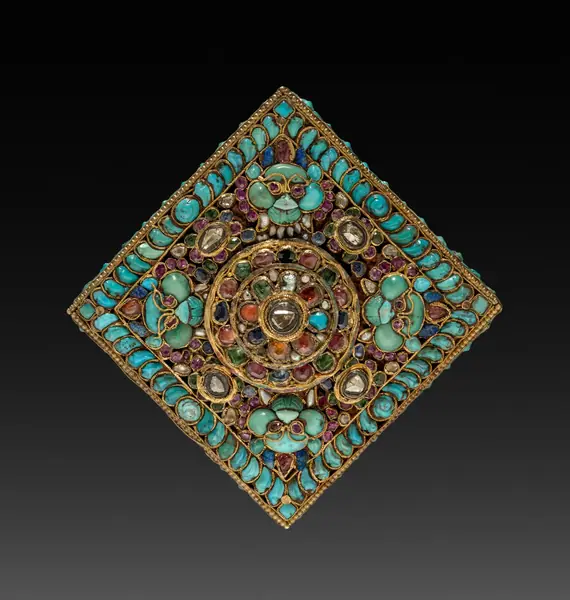 Charm CaseTibet, 19th century · 1800s
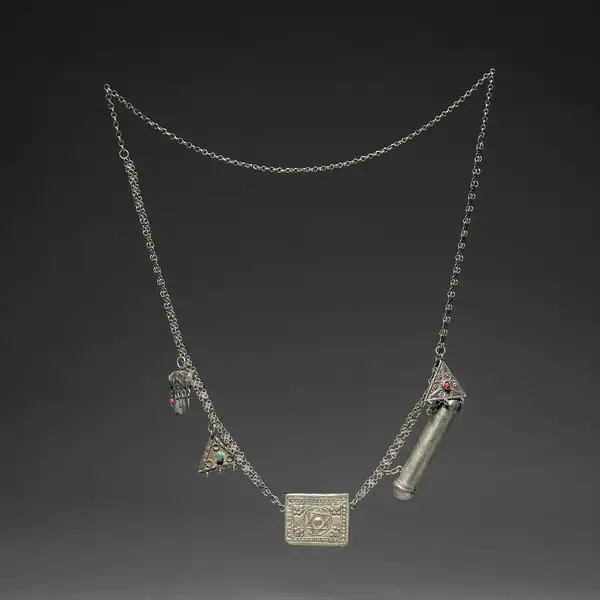 Chain with Two Charm CasesIndia · 1800s
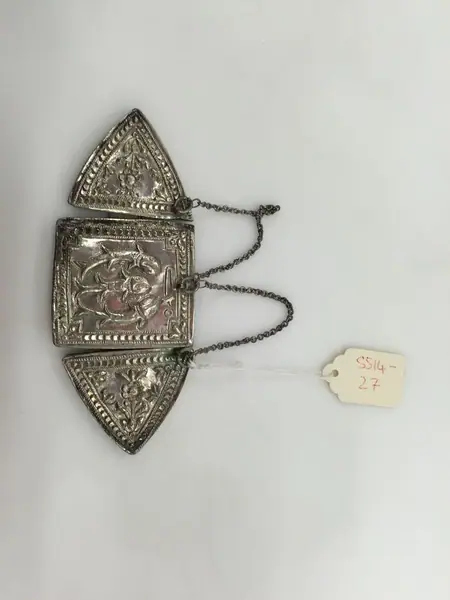 Amulet caseTurkey · 1800-1870
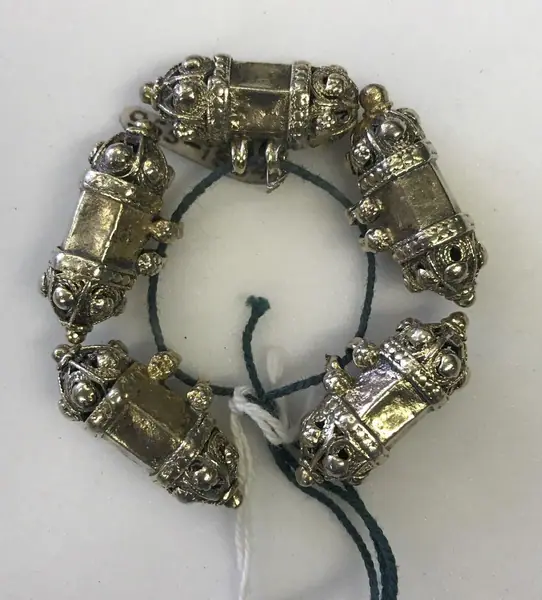 Amulet ornamentsEgypt · 1850-1880
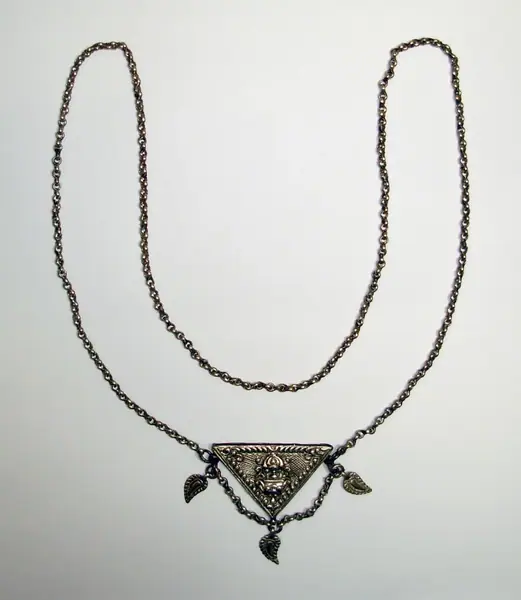 Triangular silver amulet case on a silver chain, Albania, 1850-1870Albania · 1850-1870
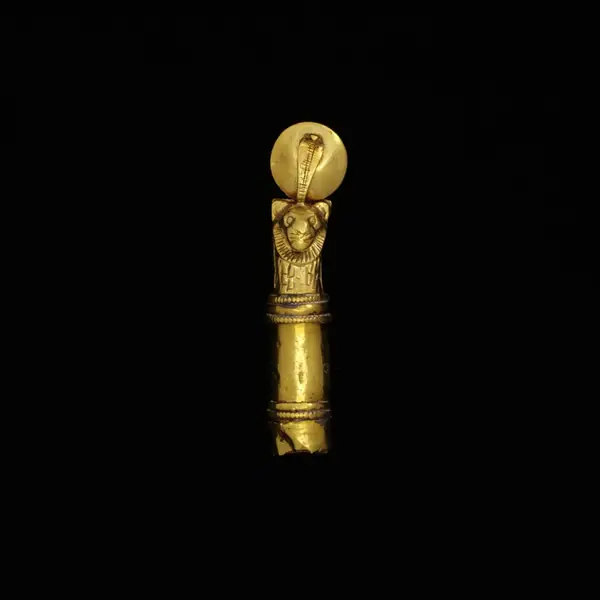 Amulet case, gold, decortated with the head of Sekhmet, Lebanon or Syria, Phoenician, 7th-6th century BCSardinia · 600BC-400BC
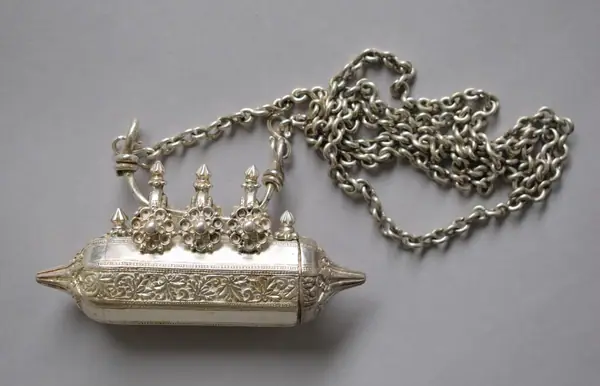 Amulet case on chain, India, 20th centuryIndia · 20th century
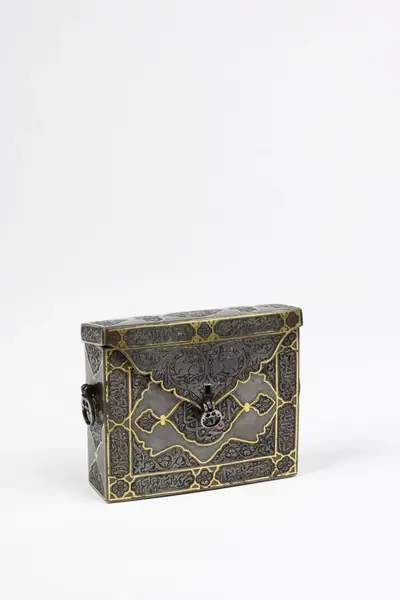 Qur'an case, engraved steel with inlaid gold, Iran, Qajar period, 1800-70Iran · 1800-1870
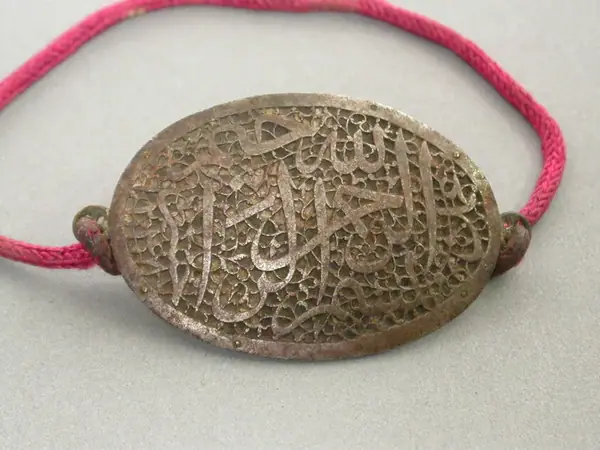 Armband Amulet (Bazuband) Inscribed "In the Name of God"Iran · Qajar dynasty (1796–1925), 19th century, dated 1832 (1248 A.H.)
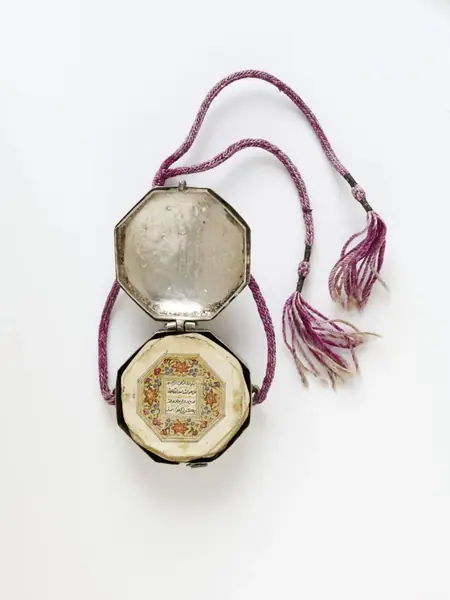 Islamic
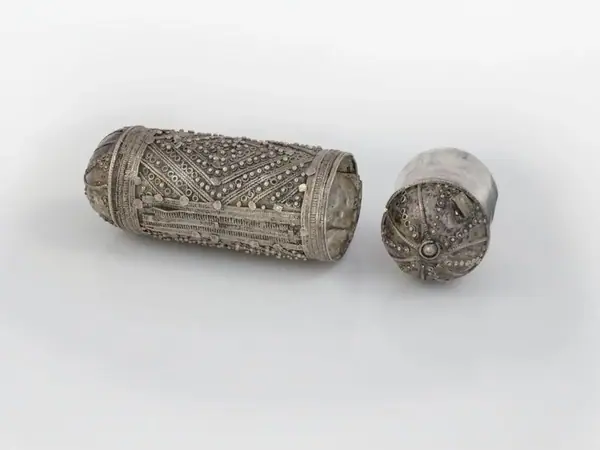 Silver amulet case (hirz) pendant with granulation, 20th century, YemenYemen
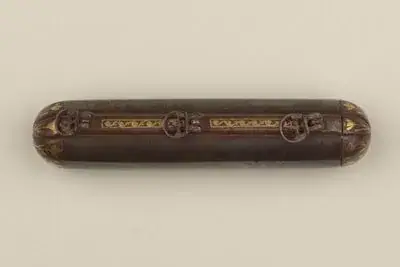 Amulet caseIreland
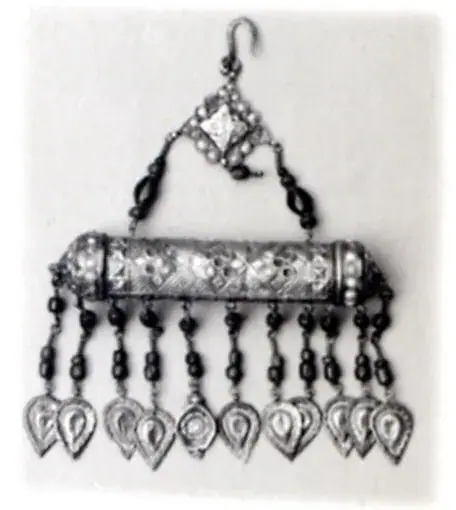 Amulet Case19 th century date QS:P571,+1850-00-00T00:00:00Z/7
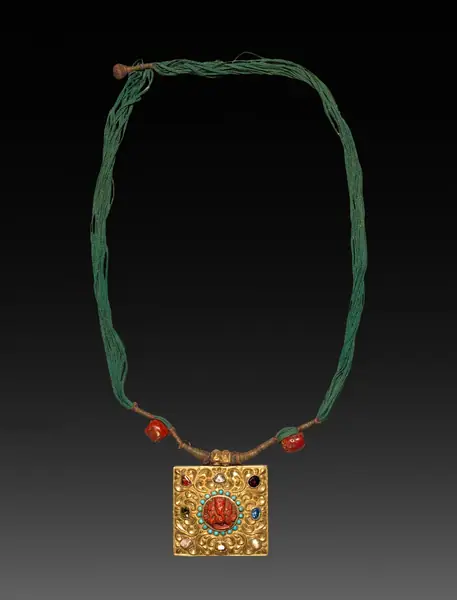 Charm CaseTibet, 19th century · 1800s
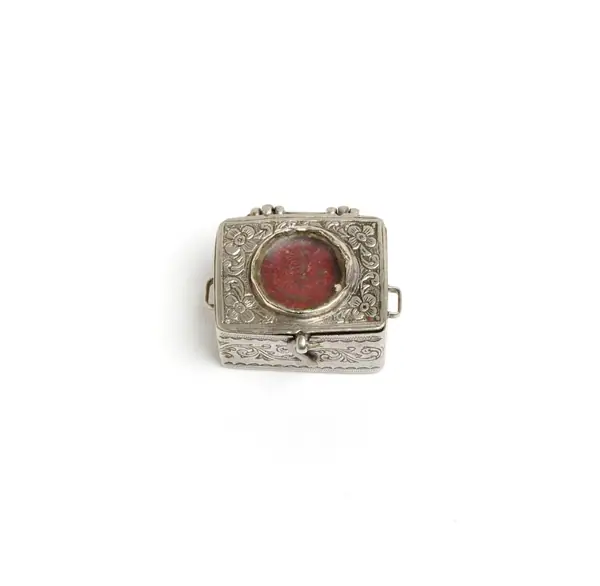 Talisman holderTurkey · 1820-30
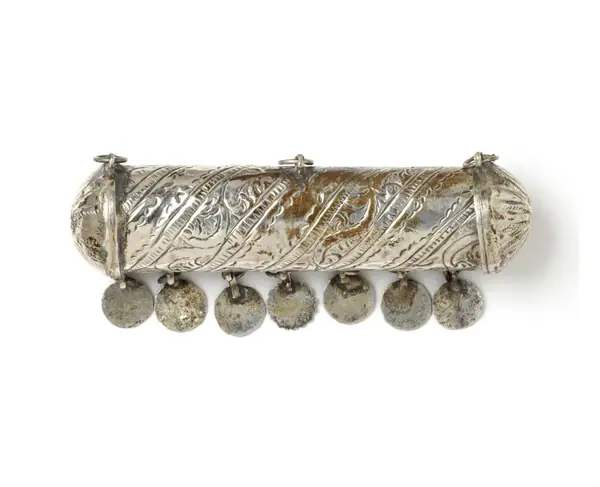 Silver cylindrical amulet case with diagonal decoration, Egypt, 1860-1872Egypt · 1860-1872
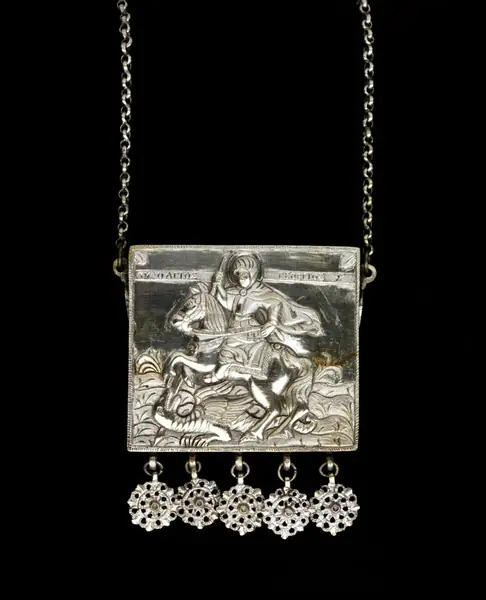 Silver amulet case with chain, embossed with StAlbania · c.1860
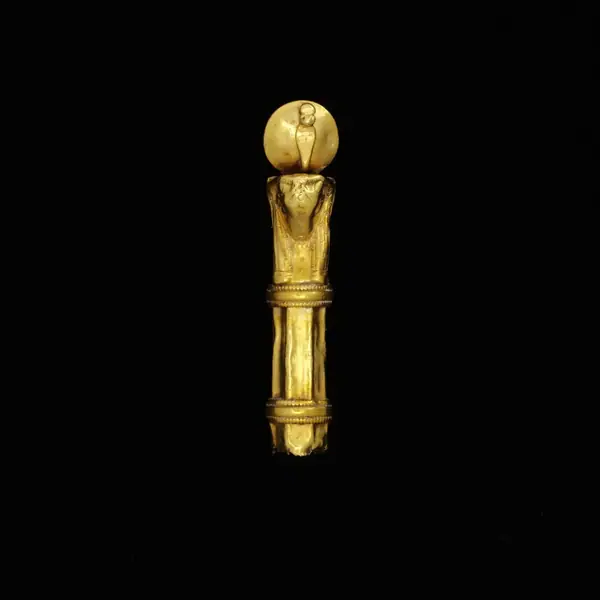 Amulet case, gold, decorated with the head of Horus, Lebanon or Syria, Phoenician, 7th-6th century BCSardinia · 600BC-400BC
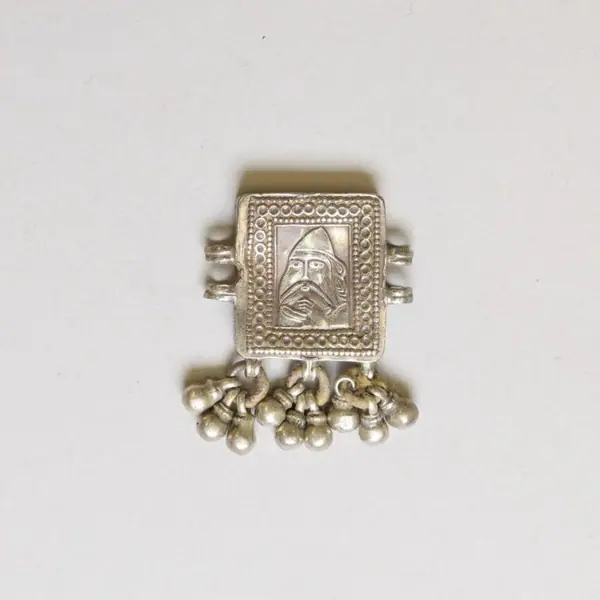 Silver amulet, central part of a bazubandIndia · 20th century
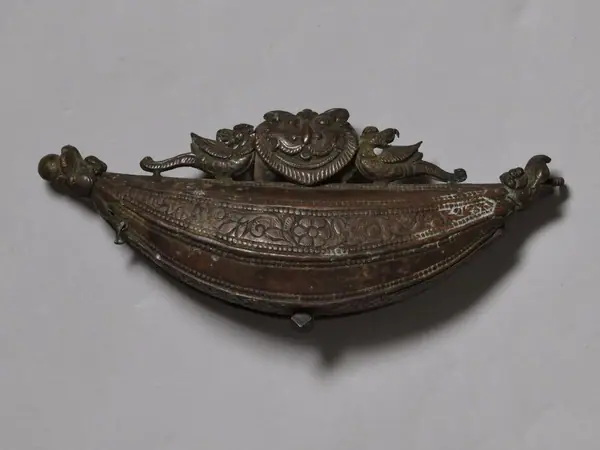 boat shaped with smiling lion; Religion, bronze, cast, S India, C1919th century
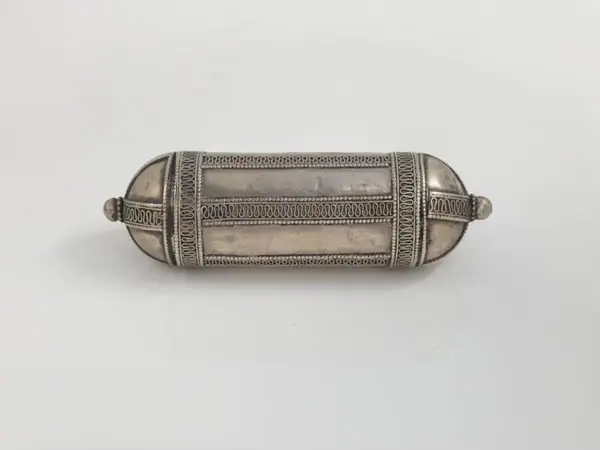 Silver amulet case (hirz) pendant with granulation and a maker stamp, 20th century, YemenYemen
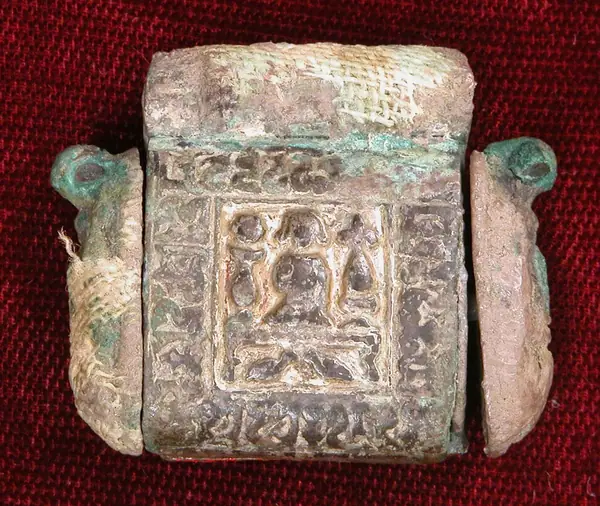 Amulet Case11 th century date QS:P571,+1050-00-00T00:00:00Z/7
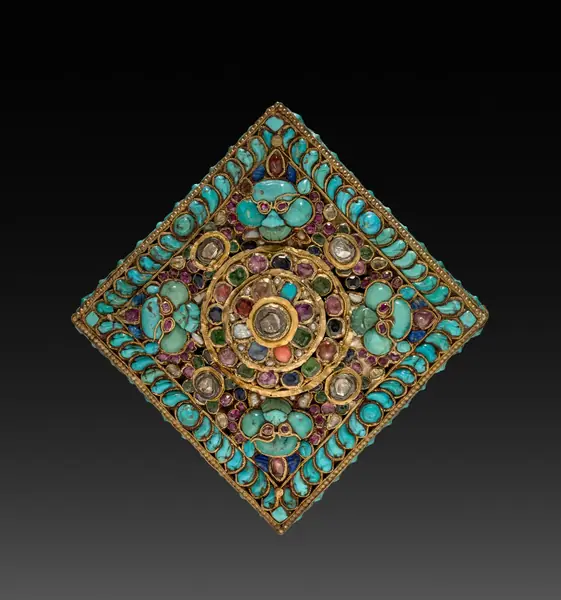 Charm CaseTibet, 19th century · 1800s
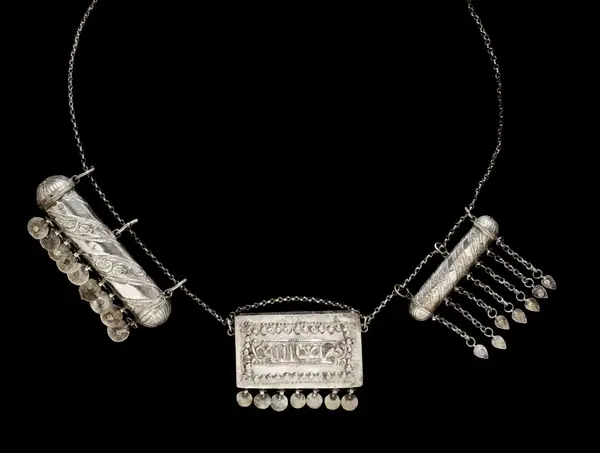 Necklace with amulet casesEgypt · 1839-1869
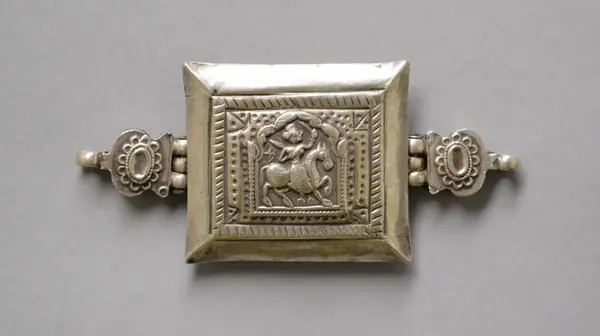 Amulet case, silver, India, 20th centuryIndia · 20th century
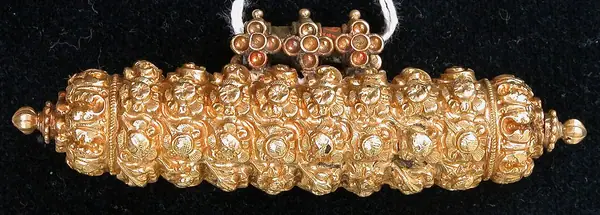 Amulet Case17th–19th century
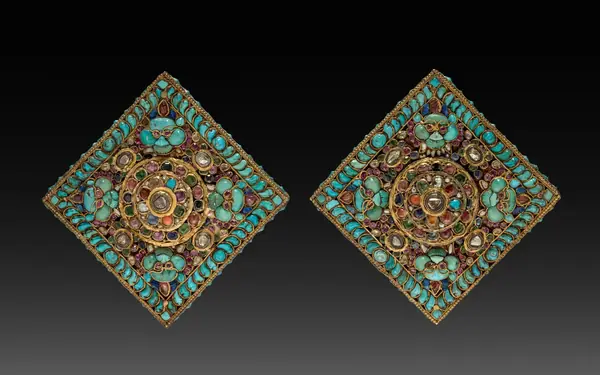 Charm Case PairTibet, 19th century · 1800s
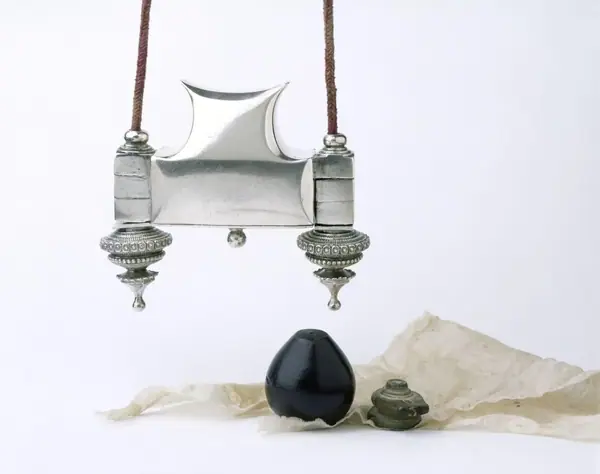 Amulet box from IndiaIndia · c.1870
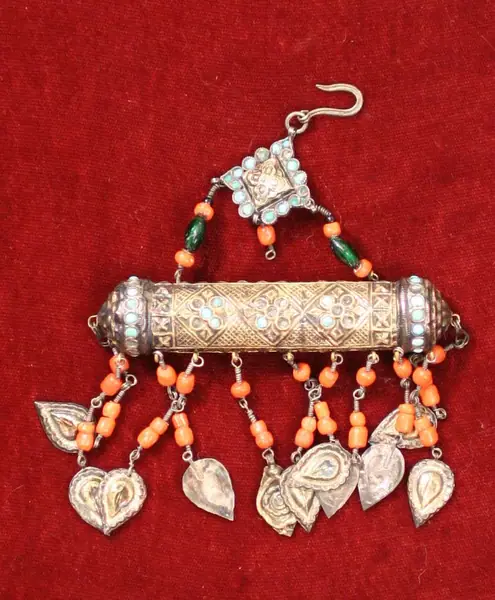 Amulet Case19 th century date QS:P571,+1850-00-00T00:00:00Z/7
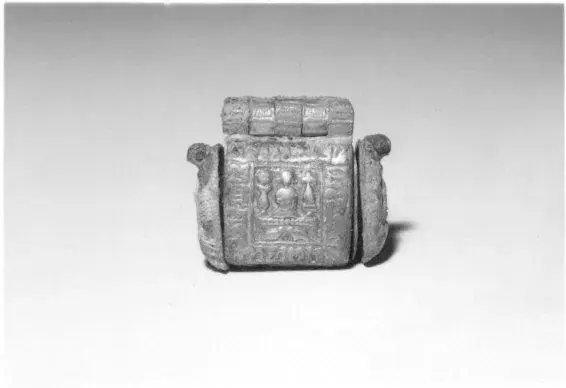 Amulet Case11 th century date QS:P571,+1050-00-00T00:00:00Z/7
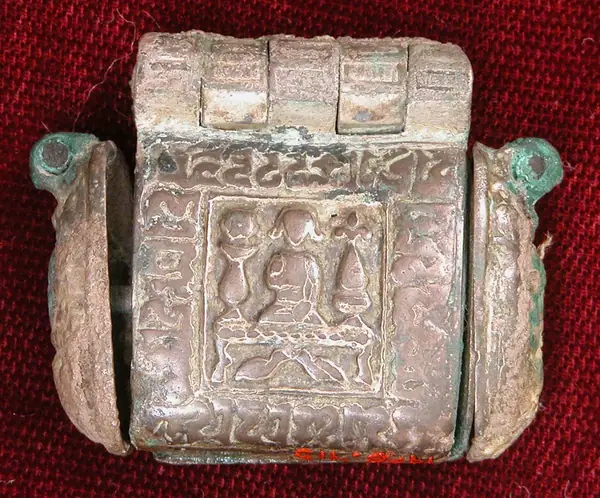 Amulet Case11 th century date QS:P571,+1050-00-00T00:00:00Z/7
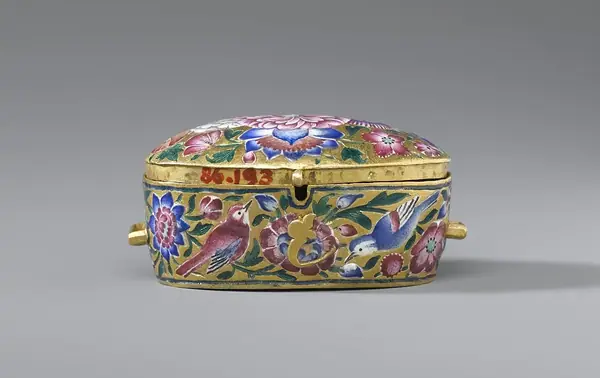 Amulet Box, 19th century19 th century date QS:P,+1850-00-00T00:00:00Z/7
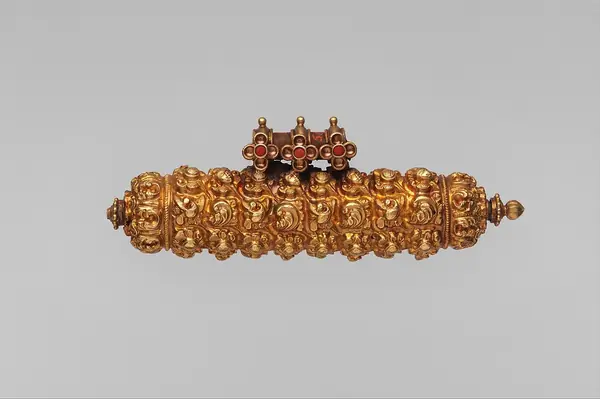 Amulet Case17th–19th century
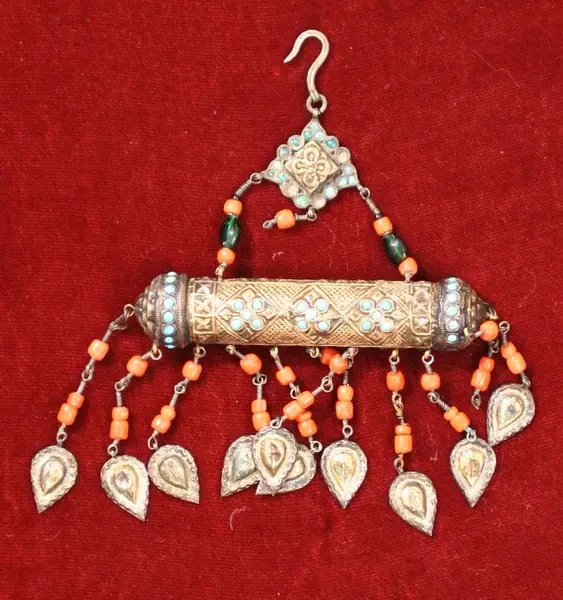 Amulet Case19 th century date QS:P571,+1850-00-00T00:00:00Z/7
More from Islamic World: Khamsa / Hand of Fatima · Nazar evil-eye beads · Talismanic scrolls & sheets · Talismanic shirts & textiles · Talismanic seals & engraved stones · Maghreb & Tuareg silver · Other & unsorted Islamic World
Every type in the gallery
Anything in the gallery can be made: any piece, any tradition, in its own material or yours, by hand from the documented original. Numbered. Price on commission, quoted before anything is made. I reply within one business day.