Kaptorgas & capsule amulets
Meaning
A kaptorga is a small box pendant that held something precious and protective: herbs, fragrant substances, a relic, or a written charm.
Intent
Worn by women on necklaces, it kept its contents' protection close to the body, perhaps also against bad smells believed to carry disease.
Significance
Kaptorgas show the capsule-amulet idea (as in bullae and encolpia) at the edge of Europe during Christianisation, and are status jewels of early Polish, Czech and Scandinavian women.
History
They are found mainly in 10th–11th century graves in Poland, Bohemia, Slovakia, Hungary and Scandinavia, often in silver with granulation. They disappear in the 12th century.
Making yours
2–4 cm trapezoid box in silver sheet with granulation and filigree, with a hinged lid and two loops.Norse, Germanic, Baltic & Slavic: the tradition
In pre-Christian Scandinavia and the Germanic world, protection came from the gods and from signs: Thor's hammer, runes, gold bracteates stamped with Odin. Amber from the Baltic shore had been carved into amulets since the Stone Age. Christianisation from the 9th to 11th centuries produced hybrid objects such as crosses cast in the same moulds as hammers. In the Slavic East, Byzantine Orthodoxy met older fever and serpent beliefs to produce the zmeevik. Scandinavian and Finnish peasant culture kept a strong tradition of protective objects against trolls, the evil eye and illness into the 19th and 20th centuries, documented by folklorists and now in the ethnographic museums of Stockholm, Oslo and Helsinki.
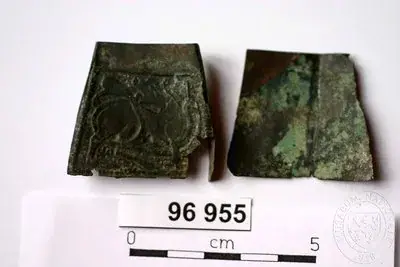 Kaptorga (část)Středočeský kraj
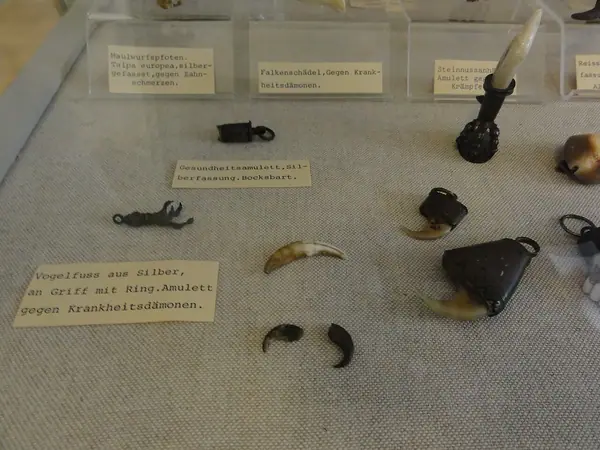 Basel 2012-10-06 Batch Part 2
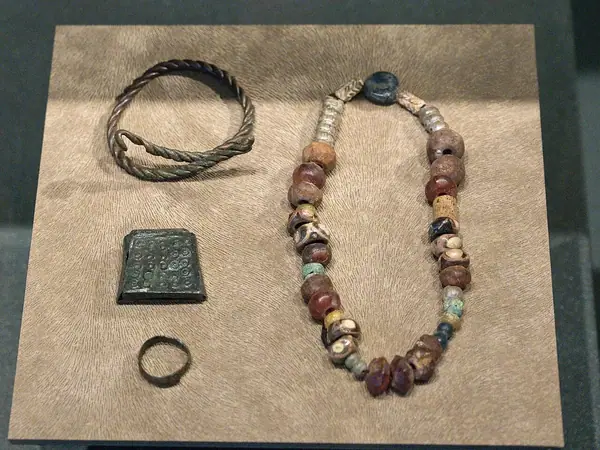 From Slavic graves, necklace, City of Prague Museum
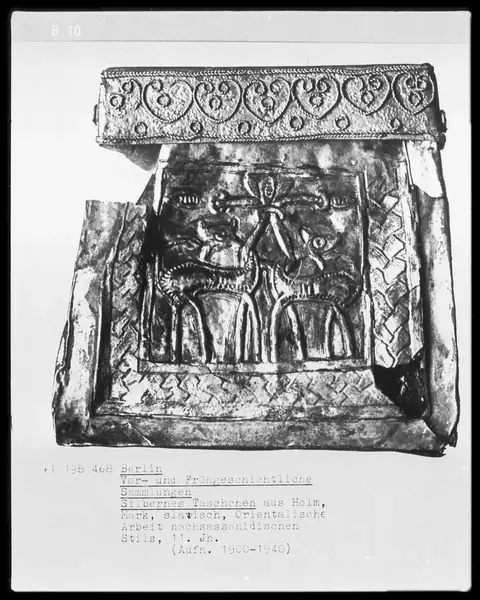 Holm kaptorga
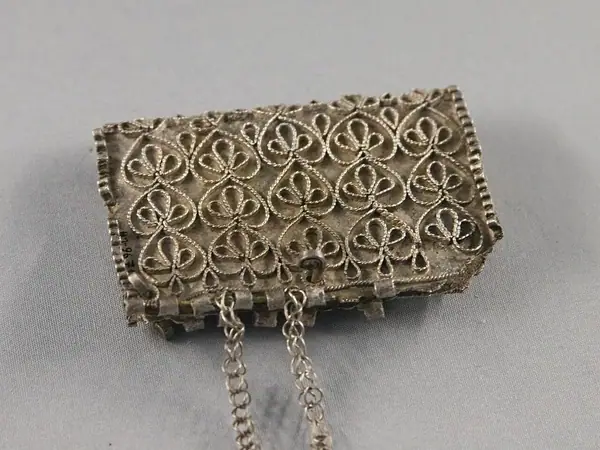 Kaptorga of the Princess of Kouřim, 900-950 AD, NM Prague
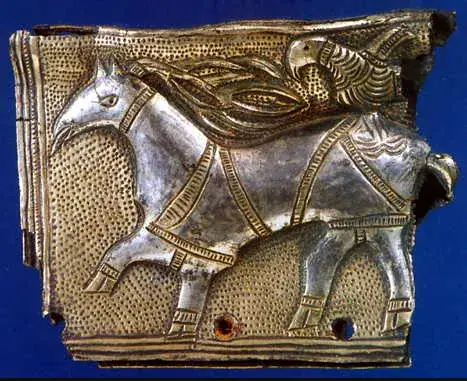 Plaketa-želenky
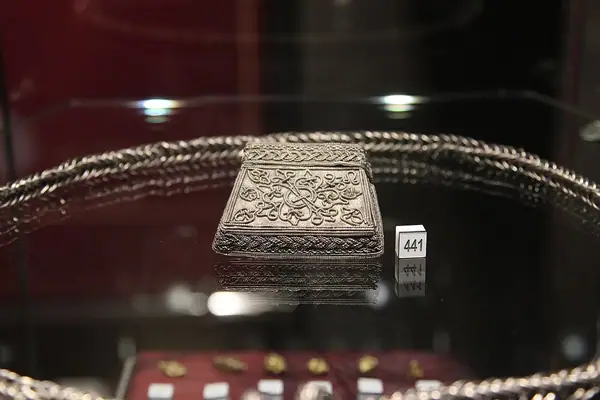 Treasures of the middle ages exhibition Plock 2019 P08 Amulet case trapeze-shaped silver Treasury from Borucin
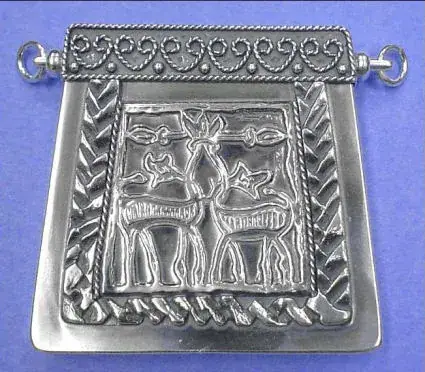 Kaptorga
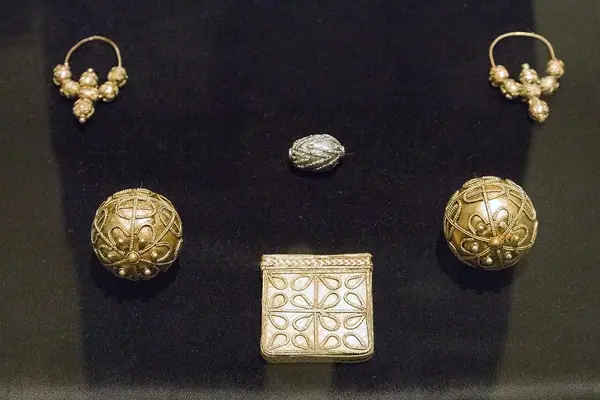 Jewellery from the Princely burial from Kolín, 850-900 AD
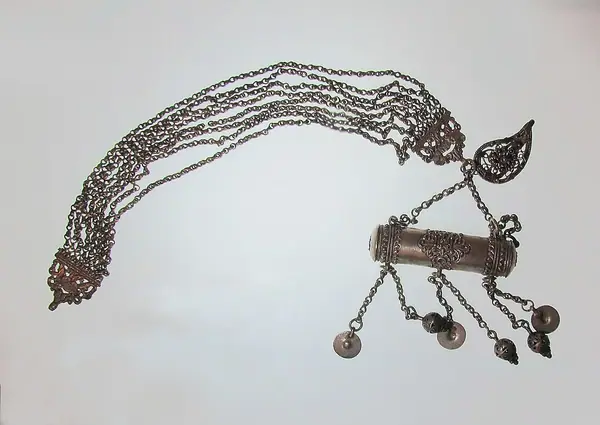 Karadorde's amulet, 18 c, Russia
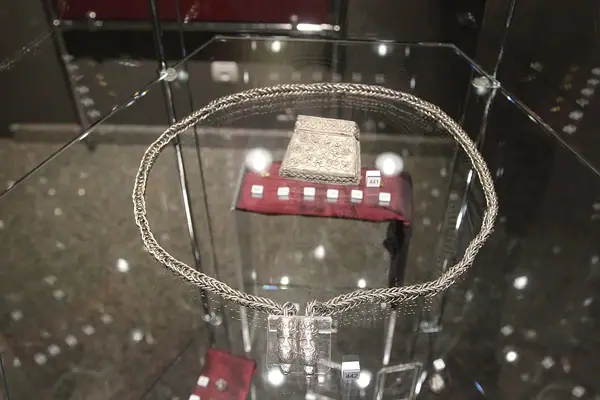 Treasures of the middle ages exhibition Plock 2019 P06 Chain with zoomorphic terminals silver Treasury from Borucin
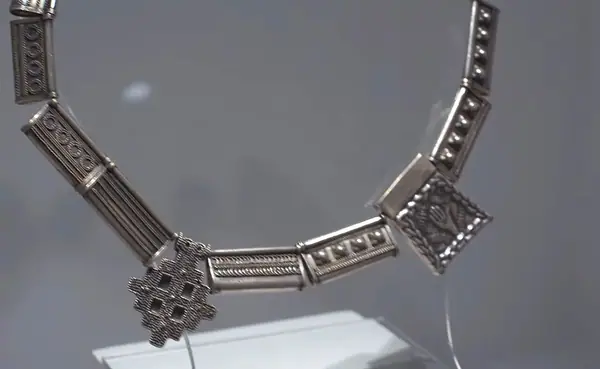 02022. Archaeological exhibition SIX-WALLS OF THE PAST
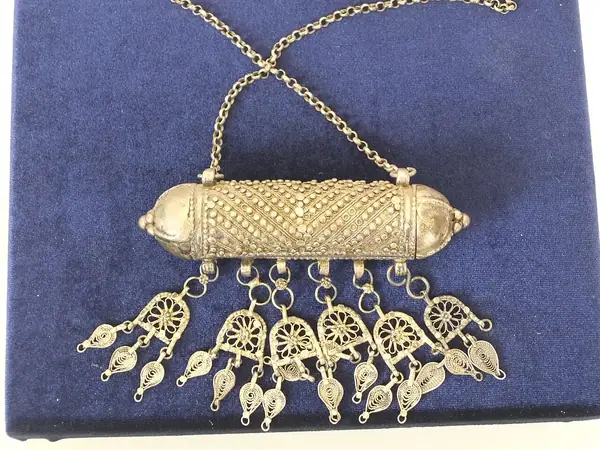 Amulet case
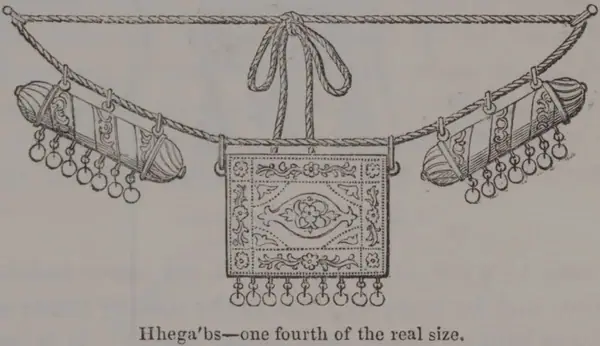 Hhega'bs--one fourth of the real size (1836) - TIMEA
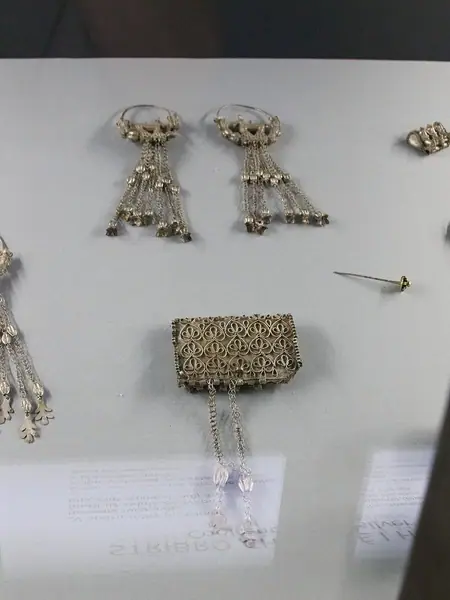 Jewellery of Princess of Kouřim, 900-950 AD, NM Prague
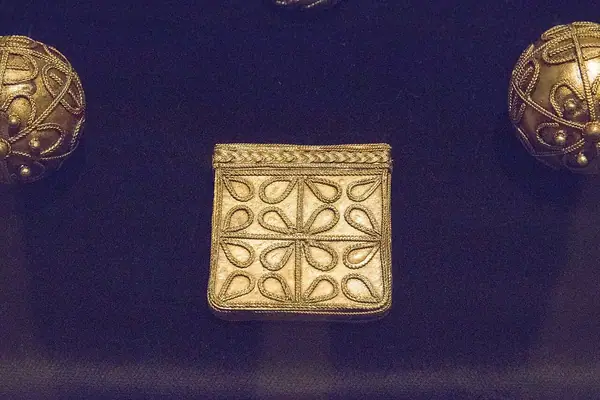 Kaptorga from the Princely burial from Kolín, 850-900 AD
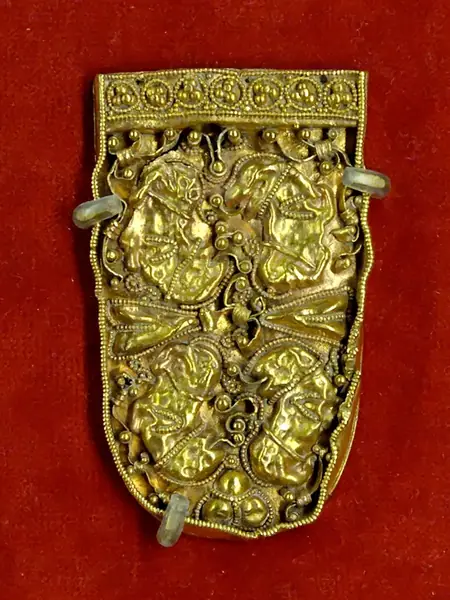 Byzantine buckle MNMA Cl23273
More from Norse, Germanic, Baltic & Slavic: Thor’s hammers (Mjölnir) · Bracteates · Amber amulets · Zmeeviks & lunnitsy · Scandinavian, Finnish & Sámi folk charms · Other & unsorted Norse
Every type in the gallery
Anything in the gallery can be made: any piece, any tradition, in its own material or yours, by hand from the documented original. Numbered. Price on commission, quoted before anything is made. I reply within one business day.